Stardate 2026-08-21: Forward the Federation!

Drake sat at the edge of the mineral pool, watching steam erase the Egyptian columns and restore them, erase and restore, as if the room itself couldn’t settle on a final draft.

“I wonder whether the main reason I can’t really write,” he said, “is that I dislike George Lucas personally.”

Alvin floated past on his back. “You’ve only ever talked to him at parties.”

“That hasn’t helped.”

Across the pool, Dustin opened one eye.

“I think he’s a talentless jerk,” Drake continued. “Not harmlessly talentless. Imperially talentless. He lurks inside my imagination like Brad in Albert’s head in I Heart Huckabees. Every time I approach some spontaneous Beat collision of jazz, sex, and prophecy—Lucas appears with a plastic helmet and explains that it’s actually part of a trilogy.”

“It’s the legal issues that suck the worst,” Graylyn said. “There are so many people ready to sue us if we say too much.”

Drake watched his foot dissolve beneath the disturbed water.“I’m blaming George Lucas for trying to install building codes in the unconscious. Star Wars is the opposite of the Beatles.”

“I was naive. I believed in a sixties I’d only read about—in the Beats, in Warhol, in the possibility that Pop Art meant you could seize whatever was flashing through the culture and make it spontaneous, personal, alive. Lucas is the cold reality: corporate mediocrity converting that flash into product. Pop culture without spontaneity isn’t culture. It’s death.”

The filtration system sighed beneath them. Outside, Wisconsin luxuriated in the lazy heat of the COVID summer. They had an entire spa in which to shelter—the pools, painted gods, and folded towels all reserved for the fortunate few—while the working classes huddled in their homes, probably streaming Star Wars.

Drake slipped into the water.

“I follow a sentence for six words, and then Lucas arrives with merchandising rights.”

Dustin closed his eye again. “Kill him.”

“In my novel?”

“In your head. We have enough legal trouble.”

Alvin rolled upright. Water streamed from his hair and shoulders. His expression had changed—not dramatically, but enough that Drake recognized the arrival of an angel on his shoulder.

“I’ll tell you a secret,” Alvin said. “My guardian angel showed me who Lucas was.”

Graylyn lowered her sunglasses, curious.

“George Lucas,” Alvin continued, “is the reincarnation of the Emperor Constantine.”

For several seconds, only the fountains spoke.

“The emperor?” Drake said.

“The Emperor. He did to Christianity what he was born to do to Hollywood: emptied a living revelation into an administrative container. He watered it down, twisted its symbols, standardized its mysteries, and converted liberation into obedience.”

Dustin opened both eyes now.

“Constantine didn’t destroy Christianity,” he said.

“Not physically. That would have been honest. He preserved it as an institution while changing its purpose. The revelation stopped being something that happened inside a human being. It became something issued from above.”

“And Lucas is learning through repetition?” Graylyn asked.

“Through destruction,” Alvin said. “His karma is to discover what he has done by doing it again—building an empire so complete that eventually he can see there is nothing alive inside it.”

Drake stared into the blue water.

“So I’m being haunted by Constantine.”

“No,” Alvin said. “Humanity is simply evolving.”

A warm breeze moved through the open doors, carrying the smell of cut grass into the tiled chamber.

“You think Star Wars failed because you expected it to remain alive. But its fans came into this world for the whole experience—not merely to be dazzled in 1977, but to watch that first revelation slowly grind itself into dust.”

“That seems unusually cruel,” Graylyn said.

“Only if you believe disappointment is meaningless. They needed to love it before they could understand its limitations. They needed the toys, the lines around the block, the sacred anticipation. Then they needed the prequels, the sequels, the television products, the endless rearrangement of the same dead symbols.”

“Spiritual inoculation by content saturation,” Dustin said, “Just like Medieval Catholicism.”

“Exactly. The disenchantment is the teaching. They are exhausting their emotional dependence on the failed imagination of the Western world—its empires, chosen heroes, final battles, and promises that the correct bloodline will save history.”

Drake watched sunlight trembling upon the bottom of the pool.

“So the fans aren’t victims?”

“They are participants. Their grief is real, but it has a purpose. They came to watch the beloved galaxy become merchandise until they could finally stop waiting for Western culture to rescue them.”

“And then what?”

Alvin smiled.

“Anything they want,” Alvin said. “That’s the point. They have to stop being slaves. And really, Drake, you were enslaved by the Beatles. You’re more conscious about it, but it’s still something you have to work on.”

Drake looked up sharply.

The sunlight on Alvin’s face became Egyptian sunlight. For one sickening instant the tiled chamber lengthened into a hall of painted pillars, and Alvin was no longer floating naked in a Wisconsin spa. He sat above Drake wearing the double crown, magnificently composed, while Drake knelt below him with blood on his hands and the Pharaoh’s command sealed inside his mind.

“You enslaved me,” Drake said.

Alvin laughed. “Of course! That’s it! I didn’t even realize. That’s what we’re working through here.”

“When you were Pharaoh. I belonged to the palace. You represented divine order, and I couldn’t distinguish the divine from your authority.”

The fountains continued their mindless silver applause.

Drake understood the resemblance. The Beatles had not commanded him to become a writer. They had given him an image of freedom so perfect that it had captured his soul and he had spent his life obeying it. Alvin had once done the same thing with sacred kingship: made obedience feel like participation in cosmic harmony.

“They’re the same problem,” Drake said. “Loving the revelation until I surrender my will to its human container.”

“That’s exactly what we’re here for.” Alvin said. “The issue isn’t whether the revelation was real, its whether we can experience it without turning one another into its furniture.”

He drifted closer to the pool’s edge.

“I’ve always known I was the Pharaoh. But if you had accused me when we were kids of enslaving you, I wouldn’t have understood. I would have thought you were calling me cruel.”

“You would have cried,” Graylyn said.

“I absolutely would have cried. Then I would have spent three days decorating a room for Drake to prove I loved him.”

Drake smiled despite himself.

“It would have hurt my feelings,” Alvin continued, “because I only remembered being a benevolent king. I remembered loving you, trusting you, giving you a sacred office. I didn’t understand that privilege allows the person giving orders to experience coercion as affection.”

The ancient hall receded from Drake’s sight. Alvin was simply Alvin again: wet hair, bare shoulders, ridiculous dignity.

“But now,” Alvin said, “I have enough self-awareness to see the truth in what you’re saying. I loved you, and I enslaved you. Those facts can exist together.”

“And then?”

“And then we stop defending our old parts and move on.”

“What about Lucas?” Dustin asked. “He persists in time. Something should be done.”

Alvin sighed. “You don’t like anyone who makes more money from technology than you do.”

“That’s incidental. I maintain my original position: Star Wars is a childish imitation of Star Trek. It took a serious inquiry into consciousness, ethics, and social evolution, removed the inquiry, then added sword fights and teddy bears.”

“Calling Ewoks teddy bears is an insult to teddy bears.” Drake sneered. “What Ewoks actually are is psychic Tribbles, made horrifyingly real. Future centuries will record that our civilization died because the Democratic Party mutated into a bunch of Ewoks.”

Angela entered from the terrace carrying a silver tray of lemonade. She wore a white swimsuit and enormous sunglasses, like an athletic widow whose husband had died under extremely profitable circumstances.

“If civilization is dying,” she said, “we should make a time capsule.”

“Containing what?” Graylyn asked.

“Original Star Trek.”

Dustin considered this with immediate seriousness.

“So when civilization falls,” Angela continued, distributing glasses, “whoever crawls out of the wreckage will know what we were really like.”

Drake raised his lemonade.

“To preserving the Federation.”

“No,” Dustin said. “To preserving the possibility that humanity might eventually create it.”

2026-08-13 Paris 1999

I’m very excited by my last couple of efforts, but still struggling with GPT’s tendency to string sentences together like spaghetti. This scene was huge and meandering but I got about a third of it into decent shape. I don’t know if this scene will happen in the book but I felt it was important to finally get the Sickies into the 90s. I was so excited by the sense of vitality in the Cat People scene that at last I believe I can make them live entire lives, but I still have to experiment to develop a sense of what they will feel like. I worked all night on this and now I’m going to dream with this new wave going out across the universe.

Paris, 1999.

The portrait had been hanging there since 1708. Nobody could say how many revolutions, adulteries, bankruptcies, marriages, executions, scandals, births, occupations, lawsuits and Christmas dinners it had watched. Henri-Auguste de Vautrin stood in armor beneath a sweep of blue velvet, one hand resting upon a helmet. Hyacinthe Rigaud had given him calves, lace, authority, a magnificent wig and the peculiar expression of a man who regarded posterity as another household servant.

Chuck stared up at him.

“I like him.”

“Of course you do,” Angela said. “He looks like he owns everything.”

“He probably thought he did,” Dustin was taking photographs.

He had started with the Rigaud and then turned his camera on the room itself. Through the viewfinder the Vautrins’ hôtel particulier seemed almost absurdly complete: pale stone walls washed gold by the late-afternoon light, parquet floors shining beneath Aubusson carpets, fireplaces taller than Angela, gilt consoles carrying porcelain that had somehow survived both the Revolution and generations of children, and windows so high that Paris appeared beyond them not as a city but as another possession of the house.

From the gallery they could see slate roofs falling away toward the Seine, chimneys and mansards stacked one behind another in the blue winter haze, the dome of the Invalides catching the last light and, farther off, the Eiffel Tower hovering over the city. The bare branches in the courtyard below made black calligraphy against the limestone façade. Somewhere downstairs servants were preparing dinner.

Dustin photographed all of it with obsessive concentration.

“He still owns this wall,” replied Chuck, thoughtfully.

Alvin, holding champagne, stepped backward to appreciate the effect. Noting that Henri-Auguste was extremely ugly, he tried to think of something nice.

“He knew how to stand.”

“He had Rigaud to tell him how to stand,” Graylyn said.

She was sitting on the parquet floor. She wore narrow black trousers riding low on her hips, a thin charcoal-gray T-shirt under a cropped black leather jacket, and square-toed ankle boots. Her dark hair was twisted up and secured with a tortoiseshell clip, leaving loose strands hanging around her face.

Her sketchbook lay open across one thigh, a thick black-bound book swollen from use, its corners crushed and its spine repaired with cloth tape. Pages had been stuffed into it until it no longer closed properly. There were quick studies of people on the Métro, hands copied from Velázquez, the shoulder of a woman seen at dinner in Milan, a sleeping dog, three attempts at a Rembrandt eye, the cuff of Henri-Auguste’s coat, a waiter in Geneva, the curve of somebody’s spine, a Bernini angel, Dustin asleep on an airplane. Graylyn drew without hierarchy. A seventeenth-century duke and a girl waiting for a bus could occupy facing pages.

It occurred to Drake, with a small private shock, that the battered object which Graylyn had left lying unattended on café tables all over Europe was probably worth more than most people’s houses. Not officially, of course. Officially it was a used sketchbook held together with tape. But if somebody slipped it under a coat and carried it out of the Vautrin house, Sotheby’s could never touch it and some collector in Geneva or Tokyo would still produce six figures for it without blinking.

At the moment Graylyn was making tiny notes beside a study of Rigaud’s lace: not about what it looked like, but where he had stopped painting it.

She had been studying the Rigaud for forty minutes. Not admiring it, studying it. There was a difference, and everybody in the room knew better than to interrupt when she became like this.

By 1999, even Graylyn merely looking at a painting had begun to constitute an event in the art world. Dealers noticed what she stopped in front of. Curators remembered what she returned to see twice. If somebody happened to mention that Aleksandr had spent an hour studying an unfashionable portrait in a provincial museum, photographs of the thing could be faxed between London and New York before lunch and somebody would quietly ask whether there were any related works still in private hands. Once, after she had stood for fifteen minutes in front of a minor nineteenth-century Danish portraitist in Copenhagen, three paintings by the man appeared at auction within the year.

Graylyn was aware of none of this in any practical sense. She knew, abstractly, that people watched what she looked at, that a dealer might make fifty thousand dollars because she lingered before the wrong canvas, that some owner in Zürich might suddenly decide not to sell because Graylyn Aleksandr had asked to see the back of his picture. The knowledge had acquired weight.

And the effort of will required to ignore that weight had changed the way she looked.

Drake had watched it happen over the years. Graylyn no longer glanced at paintings; she seemed to pass through them. Once her attention settled on a canvas, everything around it—the gallery, the people, the little earthquakes of money and reputation her interest might cause—simply ceased to exist. The concentration required to make all that disappear had intensified her gaze until there was something almost supernatural about it.

Drake could no longer watch Graylyn look at a painting without thinking about the whole history of Western art: generations of painters standing exactly as she stood now, staring into other people’s pictures, stealing from them, arguing with them, misunderstanding them, discovering some tiny trick in a sleeve or an eyelid and carrying it forward another hundred years. Titian looking backward. Velázquez looking at Titian. Manet looking at Velázquez. Sargent looking at all of them.

And now Graylyn sat on the Vautrins’ parquet floor looking at Rigaud.

Somewhere in Paris, at a gallery or in the offices of a magazine, people might already be calculating what that meant.

Graylyn was looking at the lace.

She could paint anyone.

She could paint in any period.

She knew what Rembrandt had buried beneath brown, what Velázquez had omitted, how Sargent could make a sleeve appear with four obscene flicks of a brush. Conservators sometimes came to her studio merely to argue with her.

But when Graylyn painted as herself, all those centuries seemed to disappear into black.

Not empty black.

Her black contained things.

Blue lived in it. Red disappeared inside it. Brown warmed it from below. Sometimes a figure seemed not to have been painted onto the darkness at all, but to be approaching through it across the spacetime of several hundred years.

Her new portrait of Claire de Vautrin was hanging temporarily at the other end of the gallery.

The effect was unsettling.

Henri-Auguste, 1708.

Claire, 1999.

A hundred feet of polished floor lay between them.

Three centuries did not.

Drake was poring over the resemblance. Not the obvious family features – those were almost trivial: the long nose, the narrow skull, the way one corner of the mouth turned upward slightly before the other.

It was the hand he was in awe of.

Rigaud had painted Henri-Auguste’s right hand resting lightly upon the ridiculous helmet.

Graylyn had painted Claire’s left hand resting on the carved back of a chair.

Same hand.

Not anatomically, psychologically. Both Vautrins seemed to touch expensive objects with the calm assurance that the objects would remain exactly where they had been placed. Three hundred years from now, the human race would be comparing those two hands – Rigaud’s and his wife’s.

Drake walked from one portrait to the other again. He had been doing that for fifteen minutes.

“Do they know?” he asked.

“Know what?” Graylyn did not look away from the Rigaud.

“That they do that.”

“No.”

“Did you?”

“I don’t know. I can’t talk about things like that. They’ll become rumours.”

“That’s irritating. I’m your significant other.”

Graylyn finally looked at him. “Sometimes I know things like that. Sometimes I don’t know that I know.”

Drake waited. She searched for the words and failed to find them.

“It’s not like thinking. I get into a state where everything starts communicating with me at once. And then there are things I can’t account for at all. I can explain every piece of the painting, but I can’t explain why all the pieces suddenly became that person. There’s a point where you stop making the picture. You’re watching it happen, except your hand is the thing doing it. And you know things while it’s happening that you don’t seem to know afterward.”

Drake looked from her to Claire, then across the gallery to Henri-Auguste.

“So it’s magic.”

Graylyn made the smallest shrug.

“I don’t know what else you call something that works before you understand how it works. Please don’t talk about it, okay?”

Drake smiled, “Thank you.” He was content, although he knew his role in history had been relegated to that of the husband of a painter.

He loved houses like this, and he was looking forward to a seven-course dinner. The Vautrins had spent fortunes on stupid things and fortunes on beautiful things. The distinction interested him considerably more than the fortune. At the windows, Dustin was explaining something about digital image compression to Angela, who was understanding approximately sixty percent of it. Alvin had already become intimate with three members of the Vautrin staff and had explained what everyone was having for dinner. Unfortunately he had done so in French so Drake was simply hoping it was edible. Chuck had discovered the eighteenth-century equivalent of a liquor cabinet. And Trish stood on the balcony beside her boyfriend, Nicholas Vane, admiring the view of Paris.

Vane was trying to look as though he belonged in an hôtel particulier and not a roadhouse.

He had dressed carefully: black dinner jacket, white shirt, good shoes, nothing distressed, nothing deliberately dangerous. Even his hair had been persuaded into something that suggested dinner rather than a stage soaked in sweat. He kept catching himself slouching and straightening again, trying to shed the aura that followed him everywhere now—the rock concerts, trashed hotel rooms, narcotics, backstage girls, the whole lurid mythology his record company had wrapped around him.

Around the Sickies, it bothered him more than usual. They didn’t seem to have to perform belonging. Drake could wander through a drawing room like this without seeming either impressed by it or eager to impress it. Trish on the other hand, seemed completely at home there. Alvin could make himself at home practically anywhere. Even Chuck’s bad behavior had the assurance of somebody who had never worried that he might be asked to leave – not that he wouldn’t be, he simply wasn’t worried about it.

Nick was trying to become simply a well-dressed man standing among them.

This was difficult because somebody had left a magazine on the table, one with his picture on the cover. Bare chest, black leather trousers, hair hanging damply across one eye, a silver chain disappearing below his waist. The headline said:

YOUR MOTHER WARNED YOU

Chuck picked it up.

Nick closed his eyes. “Don’t.”

Chuck turned the magazine around. “Is this you?”

“No.”

“It looks remarkably like you.”

“That guy died.”

“What killed him?”

“Publicity.”

Trish snatched the magazine away.

“Leave him alone.”

“I’m conducting cultural research.”

“You’re conducting Chuck.”

“As usual. Did you expect something else? So, Nick, I’m your pal – tell me what to think about this.”

Nick Vane was twenty-nine years old and had written two extraordinarily good albums about desire, self-disgust, jealousy, abandonment and the terrible moment when a person realizes that wanting somebody does not make loving them possible. The records were dense, violent, strangely tender things. His concerts had once been nearly austere, but then the second album sold four million copies. After that, the photographers discovered his cheekbones and his abs. Suddenly Nicholas Vane was no longer merely a musician. He became a phenomenon involving leather, sweat, bruises, hotel rooms, cigarette smoke and women photographed in their underwear.

He shrugged, partly relieved and partly sheepish. “None of it is entirely false – that’s the problem. They take real things and enlarge them until the human feeling disappears.

I do smoke. I do suffer. I have had shitty relationships with women, which hopefully I’m getting over – ” he glanced at Trish, who smiled and put her hand on his arm – “And I do take drugs.”

“And you do look great naked,” laughed Trish.

“So everybody in the industry has decided they need to be looking up my butthole every day to see what coolness is this year. I promise you, there is nothing in the world that can make you feel less cool.”

Graylyn finally rose and walked toward the Rigaud.

Nick followed her without realizing it. He liked Graylyn, possibly because she appeared to be the only person he had met in eighteen months who was completely unimpressed by him. She was examining the lace at Henri-Auguste’s wrist.

“How does he do that?” Nick asked. “He gives you three things and your eye invents twelve.”

Graylyn glanced over.

“The cuff?”

“Everything.”

“He cheats.”

Nick laughed. “I’m serious.”

“So am I.”

Nick moved closer. From ten feet away the lace seemed astonishingly intricate. From eighteen inches away it became paint.

Graylyn pointed. “He knows you’re going to finish it for him.”

“What?”

“Painters like this want the person to live,” she said. “That’s the whole game. You know the viewer wants it too. Nobody stands in front of a portrait hoping to see a convincing arrangement of pigments. They want to see the dead live.”

She pointed with the end of her pencil toward Henri-Auguste’s face.

“So while Rigaud is painting him, he’s also standing where we’re standing. He keeps becoming the viewer. He makes a mark, steps back, and feels what it does to him. Does the eye answer you? Does the mouth make you wonder what he’s thinking? Do you want to know him? If you don’t, the painting is dead, no matter how beautifully it’s painted.”

Nick looked up at Henri-Auguste.

Graylyn’s voice became more certain.

“That’s what Rigaud is so good at. He gives you faces you want to know. There’s always the sense that they’re experiencing something you could almost feel if you got a little closer, and that desire creates the depth. Rigaud doesn’t have to paint the depth. He makes you supply it.”

“So the viewer finishes the portrait.”

“They always do. But Rigaud makes you want to. And if you’re as good as he was, the invitation lasts three hundred years.”

2026-08-11 Cat People

Far from perfect, but substantially correct! I enjoyed reading it and I post it unedited as a kind of rebellion against the history of the Western Mind. I don’t think it matters anymore. 70 percent of this is good and I release it now into the astral plane in order to read the echoes and make it perfect. Their recklessness is mine.

It was almost two in the morning, late May of 1985, and all seven of them were somehow inside Drake and Chuck’s bedroom.

No one could later explain the geometry.

Chuck was lying backward across his bed with his head hanging over the edge, smoking toward the floor because this apparently constituted fire safety. Alvin had appropriated the desk chair and was sitting in it sideways, one long leg thrown over an arm. Angela was on the windowsill in an enormous Ravenswood sweatshirt, looking out occasionally at the black trees beyond the dormitory lawn as though checking whether civilization was still there.

Dustin had taken the floor.

Dustin always took the floor. He claimed floors were intellectually superior to furniture because they admitted what they were for.

Graylyn sat cross-legged against Drake’s pillows, dressed entirely in black, silently drinking something Chuck had mixed in a plastic cup and refused to identify.

Trish was beside her.

And Drake was at the stereo.

The room smelled of cigarettes, hair spray, warm beer, somebody’s expensive perfume, and the particular institutional steam-heat odor of Ravenswood Academy, although the radiators had technically been switched off weeks ago.

David Bowie’s Let’s Dance had been playing for most of the night.

They had already gone through the album twice.

Now Drake put on “Cat People” again.

Nobody objected.

That was the strange thing.

Ordinarily the Sickies objected to everything.

Chuck objected to albums having sides. Dustin objected to Chuck objecting to albums having sides. Angela objected to musicians posing with motorcycles when there was no evidence they knew how to ride them. Alvin maintained elaborate grudges against entire countries based on upholstery.

But “Cat People” silenced them.

It came into the room like weather.

The guitar seemed enormous in the darkness.

Drake turned it up.

“Jesus,” Chuck said.

Trish looked toward him.

“What?”

“We’re Cat People.”

Angela laughed.

“Oh, terrific.”

“No. Seriously.”

Chuck rolled upright.

His hair had collapsed on one side and was still standing dramatically on the other.

“We are.”

Graylyn smiled into her drink.

“That sounds like something you would realize at two in the morning.”

“No, listen.”

Chuck pointed vaguely at everyone.

“This is us. We live in these gigantic houses. Everybody’s parents know everybody else’s parents. Everybody knows everybody’s secrets. Everybody pretends they don’t.”

“True,” Alvin said.

“And everybody is always arranging something.”

That got Dustin’s attention.

“Arranging what?”

“Everything.”

Chuck began counting on his fingers.

“Schools. Jobs. Marriages. Country clubs. Who gets invited where. Who’s allowed to know what. Who’s supposed to hate whom. Who’s sleeping with whom.”

Angela said, “That last category appears somewhat less efficiently controlled.”

“Exactly.”

Chuck pointed at her triumphantly.

“Our parents tell us there are rules, but they don’t follow the rules.”

Graylyn looked toward the window.

“They follow different rules.”

The room became quieter.

Drake looked at her.

Graylyn had a peculiar gift for saying the sentence underneath the sentence.

Dustin nodded.

“That’s actually it.”

“What?” Trish asked.

“They don’t believe in morality. They believe in position.”

Alvin made a pleased little sound.

“Oh, Dustin.”

“No, really. Think about it. Their morality changes according to where everyone is standing.”

Chuck sat up straighter.

“Machiavelli.”

“Machiavelli,” Dustin agreed.

Angela frowned.

“My father believes in morality.”

Nobody said anything.

Angela looked around the room.

“Oh, fuck all of you.”

They laughed.

She did too.

But only after a second.

Drake knew enough not to look directly at her.

The music kept going.

There was something frightening in it.

Not sad.

Not exactly angry.

It was the sensation that something had already happened before you were born and that you had awakened inside its consequences.

Drake knew that feeling.

He suspected they all did.

They had inherited beautiful houses and disastrous marriages.

Trust funds and secrets.

Silverware and alcoholism.

European vacations and private detectives.

Etiquette and adultery.

They had been born into rooms where everyone knew which fork to use and nobody knew how to tell the truth.

Trish spoke quietly.

“Maybe that’s what the curse is.”

“What curse?” Alvin asked.

“Having everything already decided.”

Drake looked at her.

She was hugging her knees now.

Trish Crown, whose family could probably buy half the North Shore without taking out a loan, looked suddenly very young.

“You’re born,” she continued, “and there’s already this whole shape waiting for you.”

Dustin said, “A social role.”

“No. Bigger than that.”

“A fate,” Graylyn said.

Trish nodded.

“Yes.”

Chuck stared at the ceiling.

“I’m supposed to become my father.”

“No,” Angela said immediately.

He looked at her.

She had said it with such force that everyone laughed again.

But Chuck didn’t.

Neither did Angela.

Drake went over to the stereo.

He turned the volume higher.

The room filled with Bowie.

Now they had to lean toward one another to talk.

Which somehow made everything more intimate.

Drake said, “Then don’t.”

Chuck shouted, “Don’t what?”

“Become him.”

Chuck looked at him as if this were an unexpectedly radical proposition.

Drake shrugged.

“Don’t.”

Alvin raised his plastic cup.

“Revolutionary.”

“I mean it.”

Drake sat down on the carpet beside Dustin.

“What if that’s the whole point?”

Graylyn asked, “The point of what?”

“This.”

He gestured around the room.

Nobody knew what “this” meant.

The room.

The Sickies.

Bowie.

May.

Being fifteen and sixteen and seventeen years old and awake while the respectable world slept.

“This,” Drake repeated.

“We make something else.”

Angela leaned forward.

“Out of what?”

Drake grinned.

“This garbage.”

Chuck began laughing.

But Alvin understood.

“Alchemy.”

Everybody looked at him.

Alvin had a talent for saying ridiculous things with absolute dignity.

“Yes,” he said. “Obviously.”

Dustin groaned.

“Please don’t turn this into medieval chemistry.”

“It was never chemistry.”

“It was absolutely chemistry.”

“It was spiritual chemistry.”

“That is not a category.”

“It is now.”

Graylyn smiled.

“What gets transformed?”

Alvin looked around the bedroom.

“The inheritance.”

That stopped them.

Even Dustin.

Alvin continued.

“All of it. Their money. Their neuroses. Their marriages. Their expectations. Their terrible furniture.”

“Especially the furniture,” Angela said.

“Everything they give us.”

Alvin lifted the cup again.

“We cook it.”

Chuck stared at him.

“We cook our parents?”

“Metaphorically.”

“Pity.”

“We take what they gave us and make something else out of it.”

Trish looked toward the stereo.

“Through music?”

“Why not?”

Chuck leapt off the bed.

“Yes!”

Everyone shushed him automatically.

He ignored them.

“That’s what rock is.”

Dustin sighed.

“We have reached theology.”

“No, listen. Rock is the thing they can’t control.”

Angela said, “They own the record companies.”

Chuck stopped.

“Fuck.”

Dustin smiled.

“Checkmate.”

But Drake shook his head.

“They own the records.”

He pointed to his chest.

“They don’t own this.”

Graylyn looked at him.

There it was.

The idea.

Not yet mature enough to be called an idea, perhaps.

More like an electrical charge passing between seven nervous systems.

They could feel something together that their parents could not enter.

That was the secret.

The music wasn’t merely entertainment.

It was a room inside the room.

A second architecture.

Bowie had built a space into which their families could not follow them.

Inside it, Lance Crown was no longer Lance Crown.

Colonel Thorne was no longer Colonel Thorne.

The trusts and marriages and country clubs and lies receded.

The whole elaborate machinery of their inheritance became distant and faintly ridiculous.

For six minutes they belonged to something else.

Something dangerous.

Something beautiful.

Something that did not yet have rules.

Angela climbed down from the windowsill.

“So what do Cat People do?”

Chuck answered immediately.

“Get wasted.”

“No.”

“Have sex.”

“No.”

“Drive extremely fast?”

“No.”

“Then I don’t understand the question.”

Angela threw a pillow at him.

Trish was laughing.

Even Graylyn had lost her melancholy expression.

Dustin said, “Presumably Cat People refuse domestication.”

Drake turned toward him.

“Yes.”

Dustin saw that Drake wasn’t joking.

“Oh.”

Drake stood.

“That’s it.”

He began pacing in the tiny remaining rectangle of carpet.

“They want us domesticated.”

Graylyn said, “Who?”

“All of them.”

“That’s vague.”

“Parents. School. Everybody.”

“That’s still vague.”

“Fine. The entire fucking world.”

Graylyn smiled.

“Better.”

Chuck raised both hands.

“We refuse domestication.”

Angela said, “You can barely make your bed.”

“Exactly.”

And suddenly they were all laughing so hard that Drake had to turn the music down because somebody was going to hear them.

That made them laugh harder.

Trish collapsed against Graylyn.

Graylyn tried to maintain dignity for approximately three seconds and failed.

Alvin spilled his drink.

Dustin, who regarded uncontrolled laughter as a minor neurological malfunction, finally surrendered too.

And Drake looked at them.

His people.

That was the thought.

Not friends.

Something stranger.

His people.

Seven children of ridiculous houses.

Seven inheritors of complicated money.

Seven young animals trapped inside the machinery of other people’s desires.

They were not innocent.

That was important.

They drank.

They lied.

They stole liquor.

They slept with people they shouldn’t.

They were vain and theatrical and frequently cruel.

They weren’t trying to become good children.

That wasn’t the escape.

The escape was becoming real.

Perhaps decadence was useful because it burned through hypocrisy faster.

Perhaps dancing could do what sermons couldn’t.

Perhaps getting drunk together while Bowie played at two in the morning was not the opposite of spiritual life.

Perhaps, under the correct conditions, it was spiritual life.

Nigredo.

Nobody knew the word yet except Alvin, and Alvin hadn’t thought to apply it.

The blackening.

The sealed vessel.

Seven substances thrown together under heat.

Let the false forms rot.

Let the inherited identities decompose.

Let something new appear.

Drake restarted “Cat People.”

Chuck groaned happily.

“Again?”

“Again.”

The guitar came back.

Graylyn stood.

Then Angela.

Then Trish.

There was almost no space to dance, which naturally meant they danced.

Chuck climbed onto the bed.

Dustin protested until Alvin pulled him up by both hands.

Soon the whole bedroom was moving.

Badly.

Perfectly.

The seven of them bumping into furniture, knocking books over, laughing, sweating, passing a cigarette from hand to hand, dancing inside a private universe Bowie had somehow smuggled into Ravenswood Academy.

Outside, the great houses slept.

Their fathers dreamed of deals.

Their mothers dreamed of appearances.

Money moved silently through banks.

Promises were broken.

Affairs continued.

Families protected themselves.

Futures were being planned for children who had not consented to them.

But upstairs, behind a locked door, seven Cat People had discovered fire.

And for the moment, that was enough.

GPT Says:

What I especially like here is that this gives the Sickies a genuine credo without making them implausibly articulate teenagers: they discover their philosophy through jokes, music, booze, attraction, and flashes of insight. The crucial equation is already there: rock = a temporary autonomous consciousness in which inherited fate loses its authority. That can become one of the great governing ideas of the whole series. 🖤🔥

2026-08-07 The Thing Graylyn Was Looking For

I am totally blown away by this unedited GPT that took fifteen seconds to instruct. The only thing is to get the image generator to get them looking right.

Graylyn had been looking for something in the kitchen for eleven minutes.

This was different from merely not finding something. Not finding something was an accident. Graylyn was conducting a campaign.

She stood in front of the refrigerator in Drake’s enormous white T-shirt, drinking strawberry milk through a straw and staring into the middle distance as if the refrigerator had betrayed her politically.

“What are you looking for?” Trish called from the living room.

“If I knew that, I’d have found it.”

“That isn’t how looking works,” Dustin said.

“It is for her,” said Drake.

The refrigerator door was covered with magnets collected by Drake’s mother from places she had visited without enjoying: Wisconsin Dells, Niagara Falls, the Lincoln Presidential Library. Graylyn shifted a magnet shaped like a wedge of cheese and opened the door again.

Cold light entered the kitchen. Nothing had changed.

There was half a watermelon under plastic wrap, three bottles of beer nobody was supposed to touch, mustard, eggs, a bowl of spaghetti with a plate balanced over it, and a small foil package that Graylyn had already inspected twice.

“What’s in the foil?” Chuck asked from the floor.

“You asked me that five minutes ago.”

“I’m checking for developments.”

“It’s half an onion.”

“That’s worse than nothing.”

Chuck was lying on his back between the coffee table and the sofa, tossing a tennis ball toward the ceiling and catching it inches above his face. Every sixth or seventh throw, Alvin flinched. Chuck knew this and had therefore adjusted his rhythm to make the flinching impossible to predict.

They had arrived around noon without arranging to arrive. By two o’clock everyone was there except Angela, who was at a swim meet and had threatened to appear later smelling of chlorine and victory. Nobody had any money. Nobody had a car available. Nobody could agree upon a movie, and nobody genuinely wanted to go anywhere.

It was Saturday. The day had opened around them like an empty public building whose guards had gone home.

Drake sat at the kitchen table making a list of possible band names on the back of an envelope. He had no band. This freed him to concentrate on naming it.

“The Carbonated Saints,” he said.

“No,” said five people.

“The Velvet Emergency.”

Trish considered it. “Almost.”

“It sounds like a feminine-hygiene crisis,” Dustin said.

“Then it has menace.”

Graylyn shut the refrigerator and began opening drawers.

She had her dark hair gathered loosely at the back of her head, although strands had already escaped around her face. She moved through the kitchen with the unquestioned authority of somebody searching a house she did not live in. Drake’s family had long ago ceased to regard this as unusual. Graylyn knew where they kept the batteries, the aspirin, the birthday candles and the envelopes, although she could never remember where they kept the glasses.

She opened the silverware drawer.

“Not in there,” Drake said.

“You don’t know what I’m looking for.”

“Neither do you.”

“I’ll know it when I see it.”

This answer satisfied everybody. It was, after all, Graylyn’s governing principle in art, clothing, romance and refrigerators.

Trish wandered in and leaned against the counter. Without asking, she took Graylyn’s strawberry milk, drank from it, and returned it. Graylyn accepted the carton without looking at her. The maneuver had been performed so smoothly that it appeared to involve a single person with four hands.

“What about toast?” Trish asked.

“I don’t want toast.”

“You looked in the breadbox.”

“I wanted to know what our options were.”

“Our options are toast.”

“Our civilization is finished.”

From the living room came the soft mechanical click of Dustin turning the stereo dial. Static rushed through the apartment; fragments of baseball, an advertisement for carpeting, and half a drum fill passed by. He stopped when he found Bowie.

Chuck sat up immediately.

“Louder.”

“It’s already loud.”

“It’s Saturday loud. I want historically significant loud.”

Alvin reached over from the sofa and turned the volume down two marks. Chuck reached up and turned it back one. This was the compromise they had evolved over several years: Alvin reduced things by two; Chuck restored one; civilization continued.

Graylyn opened the cabinet above the stove.

“What do you think you lost?” Drake asked.

“I didn’t lose anything.”

“Then this is looting.”

“I’m hungry.”

“There’s spaghetti.”

“I don’t want spaghetti.”

“Toast,” Trish reminded her.

Graylyn gave her a chilly look and continued searching.

Drake watched her from the table. He knew that if he got up and helped, she would tell him to sit down. If he ignored her, she would eventually accuse him of withholding information. If he named every item in the kitchen, she would become furious. The correct role was to remain available while pretending not to observe.

Longtime friendship consisted largely of learning which forms of assistance were insulting.

Alvin appeared in the doorway. “I could make grilled cheese.”

Graylyn stopped.

Everyone felt the slight change in atmospheric pressure.

“With what kind of cheese?” she asked.

Alvin opened the refrigerator and looked. “Orange.”

“That’s not a kind.”

“It’s the kind we have.”

Graylyn considered the orange cheese. She took another drink of strawberry milk.

“Maybe.”

Alvin removed the bread, butter and cheese. He did not ask whether anyone else wanted a sandwich. That question would only produce confusion, false refusals and a second cooking operation ten minutes later. He began making six.

This was his role in the group, although nobody had assigned it to him. Alvin anticipated the needs people planned to deny until the needs became unbearable. He did this without announcing that he was taking care of them, which was why they permitted it.

Dustin came into the kitchen carrying the tennis ball, which he had confiscated after Chuck knocked over an ashtray.

“What is she looking for?”

“Meaning,” Drake said.

“A viable future,” said Trish.

“Something salty,” Graylyn said suddenly.

The room became still.

“That’s it?” Chuck called. “You turned the house upside down because you wanted something salty?”

“I didn’t know until now.”

Drake rose, reached over the refrigerator and brought down a bag of potato chips.

Graylyn stared at him.

“You knew those were there?”

“Yes.”

“You watched me look.”

“I asked what you were looking for.”

“I didn’t know.”

“Neither did I.”

Graylyn took the bag from him. Their fingers barely touched, but an entire old mechanism engaged: accusation, defense, forgiveness, ownership. It ran silently beneath the moment like the workings of a clock.

She opened the chips and ate one.

“Those are stale,” Dustin said.

Graylyn ate another. “They’re perfect.”

Alvin’s first sandwich began to hiss in the pan. Bowie gave way to an advertisement, and Chuck shouted for Dustin to find another station. Trish perched on the counter and stole a potato chip every time Graylyn looked away. Graylyn knew. Trish knew she knew. Neither disturbed the arrangement.

Drake returned to his envelope.

“The Stale Perfection,” he said.

Graylyn glanced at him. “That’s the band.”

Outside, the afternoon was brilliantly ordinary. Cars moved along the street. A lawn mower started somewhere and stopped again. The whole adult world appeared to be occupied with errands, repairs, appointments, ambitions—things that led to other things.

Inside, nothing led anywhere.

Alvin cut the sandwiches diagonally because Trish believed they tasted better that way. Dustin found a station playing “Eight Miles High,” and Chuck, for once, did not demand something louder. Graylyn stood by the refrigerator with her strawberry milk and the open bag of chips, chewing thoughtfully, no longer looking for anything.

They had nowhere to go and nothing to become before dinner.

For one Saturday afternoon, this was not emptiness.

It was arrival.

Unconsciousness

It’s getting more fun to write, I’m less uptight about posting unedited AI, not worried anymore about wrong impressions readers might form about the story, or things evil minions of the entertainment industry will say about it. So this is a first attempt from weeks ago to address the issue of unconsciousness. It won’t be the final form but what the hell. I finally feel free to post any version of the story online I want.

One of my first memories had no morning.

That was the strange thing about it. There was no cereal, no school shoes, no cartoon voices from the den, no cold hallway under my feet. There was no beginning at all. I simply arrived in the afternoon, as if I had been delivered there by mistake, dropped into my own bed by some bored angel with a cigarette dangling from its mouth.

The curtains were closed, but not well. My mother had never learned to close curtains all the way. She always left a slit, a thin diplomatic opening through which the world could continue negotiations. A blade of yellow light lay across the carpet, bright as a ruler. Dust moved in it. Slow, golden, self-important dust, the way dust moves when adults have decided something and children are expected to live inside the decision.

My head hurt.

Not the ordinary hurt of fever, not the cottony misery of flu. It was a deep metallic pain, as if a bell had been rung somewhere inside my skull and the sound had become trapped there, traveling in circles. My mouth tasted like pennies. One side of my face felt too large. I remember touching my cheek and discovering tenderness without yet knowing what tenderness meant when it belonged to injury instead of affection.

My mother was sitting beside the bed in a dress and stockings, which struck me as wrong. She should have been in slacks if she was home with a sick child. She should have been soft, provisional, domestic. Instead she looked arranged. Her hair was done. Her lipstick was on. She had the posture of a woman waiting to be photographed beside a swimming pool she did not intend to enter.

“Oh, sweetheart,” she said, and leaned forward with too much brightness. “You’re awake.”

I asked what time it was.

“Afternoon,” she said.

That was all. Afternoon. As if afternoon were a country and I had been away on business.

I asked why I wasn’t at school.

“You were sick,” she said instantly. Too instantly. The answer came out like something rehearsed in another room. “You had a terrible spell this morning. You don’t remember?”

I did not remember. That was the trap, of course. The trap was shaped exactly like my ignorance.

She put her hand on my forehead, not to feel for fever but to confirm ownership of the scene. Her hand was cool and smelled faintly of perfume, face powder, and cigarettes she pretended not to smoke. “You were burning up. You scared me half to death.”

This was my mother’s gift, her great domestic talent: she could make her fear the central fact of your suffering. You could be the one in bed, the one with the wound, the one who had lost a chunk of the day, but somehow she had been frightened, she had been brave, she had endured. It was not cruelty exactly. Cruelty would have had a cleaner edge. This was more like theater with a velvet curtain dropped over a crime.

I believed her. Children believe the weather reports issued by their mothers. If she said fever, then fever had come. If she said I had moaned and thrashed and begged not to go to school, then some small stranger wearing my pajamas must have done so. I accepted the existence of that other boy. He was convenient. He could have all the parts of my life I couldn’t account for.

She gave me orange juice with a straw. I remember the straw had red stripes. I remember thinking it looked festive, and that seemed wrong too. My room smelled of aspirin and clean sheets, but beneath it there was another smell, sharper and masculine, like aftershave and anger. My father had a way of leaving anger behind him in the air. It clung to doorframes. It hid in ashtrays. It sat in the leather chair downstairs with its legs crossed.

“Where’s Dad?” I asked.

“At work,” she said.

But she looked toward the door when she said it.

That glance remained in me longer than the pain. For years it floated there unattached, a little scrap of film with no projector. My mother’s eyes moving to the door. Not fear, quite. Calculation. The quick animal mathematics of a woman deciding how much reality a child can be permitted to have.

Later, much later, I would understand that he had not gone to work that morning, not at first. He had been home. There had been shouting. There had been one of his lessons. Men like my father loved lessons. They believed existence was a military academy designed for their private convenience. They believed fear was discipline, discipline was love, and love was whatever remained after they had exhausted themselves.

I must have crossed him somehow. I must have stood in the wrong place, answered in the wrong tone, failed to become invisible quickly enough. There was always some law I had broken without being informed of its passage. The laws changed according to his blood pressure, his bourbon, his humiliation at whatever office or agency or secret little fraternity of dead-eyed patriots had failed to recognize his genius that week.

Years afterward, a memory returned in fragments: the kitchen floor shining under me; the white cabinet door open; my father’s belt buckle at the level of the sun; my mother saying his name, not as a protest but as a plea for moderation, as if violence were acceptable so long as it did not leave paperwork.

Rick.

That was all.

Rick.

Not stop.

Not don’t.

Not he’s a child.

Just his name, softly fired across the room like a warning shot at a dog.

And dog he was. Not a wolf, not a lion, not the dark emperor he imagined when he tightened his tie in the mirror and went off to do mysterious errands for mysterious men. A dog. A ridiculous dog of a husband, snarling at the furniture, pissing on the rug of the American Dream, then waiting to be praised for guarding the house.

My mother protected him from the truth the way some women protect antique silver from tarnish. She wrapped him in excuses. He was tired. He was under pressure. He had responsibilities no one understood. He loved us in his way. That was her favorite phrase, his way, as if love were a foreign country where assault and silence were local customs.

That afternoon, though, I knew none of this. I only knew the room was too still. I knew my mother was smiling with her mouth and not her eyes. I knew I had missed school and should have been happy, but instead felt as if school had continued somewhere without me, arithmetic, spelling, recess, all of it marching forward while I had fallen through a trapdoor.

“Will I go tomorrow?” I asked.

“We’ll see,” she said.

Another perfect adult answer. A door that looked open and led nowhere.

She stroked my hair. I let her. I loved her then with the helpless, devotional love of a child for the person who explains the world. Her hand moved slowly across my forehead, and for a moment I felt soothed. That is the worst part to remember. Not the injury. The comfort. The fact that the same hand that concealed the truth could feel like mercy.

She told me to sleep. She said sleep would make me better.

So I slept.

For many years that was the whole memory: afternoon, curtains, orange juice, my mother’s cool hand, the strange holiday of not going to school. I kept it in the wrong drawer, among ordinary childhood illnesses, chicken pox, sore throats, the sweet boredom of daytime television. Only later did the drawer begin to stink.

The body knew before I did. The body kept better records than the family. A flinch when a man raised his arm too quickly. A nausea at certain aftershaves. A hatred of closed curtains. The feeling, whenever I woke from a nap, that something had happened and everyone else had agreed not to mention it.

That was the real inheritance my parents gave me: not money, not manners, not the good schools, not the polished shoes lined up by the door like obedient little coffins. They gave me discontinuity. They gave me the sense that consciousness itself could be edited by committee. They gave me a childhood with missing reels, and then acted offended when I became obsessed with narrative.

Of course I became a writer. What else was I supposed to do? The official story had tried to murder the actual story in its crib. Someone had to go back into the afternoon and open the curtains.

When I think of that boy now, waking up alone in the yellow slit of light, I do not pity him exactly. Pity is too small. I want to sit beside him before she comes in. I want to say: You are not sick. You are injured. You are not confused. You have been confused by experts. The pain in your head is not proof of weakness. It is evidence.

But no one said that.

Instead my mother entered with orange juice and lipstick and a lie polished smooth enough for a child to swallow.

And I did swallow it.

That was the first magic trick I remember: a man knocks his son unconscious, a woman changes the name of the event, and by afternoon the house is respectable again.

Chat-GPT 5.6

I’m supposed to be editing these AI things, but I find that I don’t care anymore. Someday I’ll smooth it all out and make it more personal. Meanwhile, this is raw 5.6 and it is quite an amazing improvement over 5.5.

July 9, 2026

Here is the scene, grounded in Drake and Angela’s established temperaments and in the series’ balance of affectionate satire, insider realism, and cultural elegy. fileciteturn0file0 fileciteturn0file1 fileciteturn0file2

:::writing{variant=”document” id=”48173″}
The Albrecht Spa had been constructed upon the theory that sufficient wealth could persuade nature to behave itself.

The building stood in the Wisconsin woods like an Egyptian embassy from a more hygienic dimension: sandstone corridors, copper lamps, artificial waterfalls, heated pools tiled in lapis blue. There were massage rooms named for constellations and a meditation chamber shaped like a small pyramid. The dining room windows looked out upon birches, pines, and a lake still cold enough in May to kill anyone who mistook it for scenery.

During the first weeks of sheltering in place, they had treated the spa as a private resort.

By June, it had become a submarine.

Alvin’s family had closed the property before the state ordered them to. The guests had gone home, the employees had been furloughed, and the seven Sickies occupied the complex like the final members of an extinct royal household. They wandered around in robes and bathing suits, drank wine from the spa restaurant’s inventory, and tried not to check the numbers too often.

The world outside arrived through their phones as graphs, refrigerated trucks, governors, rumors, arguments, and footage of empty streets.

Inside, Chuck had declared the aromatherapy lounge a bar.

“This is not a bar,” Alvin said.

He was wearing a white robe embroidered with the Albrecht lotus and carrying a tray of cucumber water.

Chuck raised his glass. “Anything becomes a bar when you lose faith in tomorrow.”

“That,” Dustin said, “is probably the most culturally representative thing you’ve ever said.”

Dustin sat cross-legged on a chaise beneath a mural of Nut, the Egyptian sky goddess, his silver-blond hair untidy from several months without professional intervention. His laptop was open beside him, displaying a grid of news sites, medical journals, and computer terminals. He had spent the afternoon explaining viral replication to them and had finally been threatened with expulsion from the room.

Trish lay on a couch with her head in Angela’s lap. Graylyn sat near the windows, sketching the tree line. Angela, still instinctively athletic even in middle age, stroked Trish’s hair with one hand while using the other to scroll through photographs on her phone.

Drake stood at the sound system.

The spa’s music library had been chosen to induce submission. There were albums of rainfall, whale calls, Tibetan bowls, and something called Celestial Pan Flute Rejuvenation. Drake had connected his phone and begun correcting the atmosphere.

“What are we drinking to?” he asked.

“The annihilation of linear time,” Graylyn said.

“Again?” said Chuck. “We drank to that Tuesday.”

“We’re getting older. We repeat ourselves.”

Drake looked around the room.

They were all there.

That remained astonishing.

When they had been sixteen, they had assumed they would always be together because sixteen-year-olds believed desire possessed constitutional authority. Later they had assumed they would lose one another because adults mistook exhaustion for wisdom. Yet here they were: seven improbable survivors quarantined in a monument to Alvin’s family money, waiting for civilization to decide whether it intended to continue.

“What do you think they’ll remember about us?” Angela asked.

Nobody answered at first.

The question had entered quietly, but Drake felt the whole room reorganize around it.

“Who’s they?” Chuck said.

“The future.”

“The future has never shown much interest in my work.”

“You’ve never done any work,” said Graylyn.

“I’ve delegated.”

Angela held up her phone. On the screen was a photograph of a deserted avenue in Chicago, the buildings magnificent and useless beneath a crystalline sky.

“Our generation,” she said. “What will anyone remember?”

“The internet,” Dustin replied.

“That wasn’t us,” Trish said. “That happened to us.”

“We built portions of it.”

“You personally built portions of it. The rest of us kept forgetting our passwords.”

“They’ll remember that we were the last people to grow up before it,” Alvin said. “Before everyone carried the entire world around in a little glass rectangle.”

Chuck examined his own rectangle. “We should have stopped them.”

“You bought four of them the first year they came out.”

“I was infiltrating.”

Graylyn continued drawing. “They’ll remember that we sold everything.”

“Everything?” Angela asked.

“Music. Rebellion. Childhood. Privacy. Grief. Sex. Every feeling became a product, and then every product became a subscription.”

“That’s cheerful,” Alvin said.

“I’m a painter. Cheerfulness is outside my department.”

Trish opened her eyes. “They’ll remember the clothes.”

“They absolutely will not,” said Angela.

“They remember the clothes from every generation.”

“They remember six outfits. The rest becomes evidence against us.”

“We had very good coats,” Trish insisted.

Drake listened to them, smiling. Their voices still had the old rhythm. One began a thought, another inverted it, a third decorated it, and Chuck knocked it over to see whether anything valuable fell out.

Behind the jokes was a real apprehension. They had arrived at the age when history began removing the labels from one’s private experiences. The songs were no longer theirs. The clubs were documentaries. Their scandals had become aesthetics for children who wore reproductions of the clothes and had never smelled cigarette smoke in a restaurant.

“We’ll be remembered as the generation that believed irony would protect us,” Dustin said.

“Didn’t it?” Alvin asked.

“No.”

“It was never intended as protective equipment,” Drake said. “It was more like decorative sunglasses.”

“We thought we could mock everything and therefore not belong to anything,” Angela said.

Graylyn looked up from her sketchbook. “We belonged to each other.”

The room became still.

Chuck took a drink. “Christ, Graylyn. Warn us before you say something sincere.”

“I apologize. It won’t happen again.”

Outside, the birches moved in the evening wind. The lake showed through them in metallic fragments.

Trish sat up. “I know what I’ll remember.”

Angela smiled down at her. “The clothes?”

“The summer of 1985.”

They all understood immediately, although the summer contained hundreds of nights, houses, swimming pools, automobiles, arguments, disappearances, and catastrophes narrowly avoided.

“Which part?” Alvin asked.

“The night at the lake,” Trish said. “When we were stoned and listening to Bowie.”

Drake looked down at his phone.

He found the song without needing to type the whole title.

The opening guitar tore through the aromatherapy lounge.

“Suffragette City.”

It arrived indecently alive, as though forty-five years had been a clerical error.

Chuck gave a shout. Angela laughed. Alvin abandoned the cucumber water and began turning down lamps. Graylyn shut her sketchbook. Dustin closed his laptop, which was his generation’s equivalent of kneeling before an altar.

For a moment the spa vanished.

They were back beside the lake in 1985, lying on blankets beneath a sky made enormous by marijuana. Chuck’s Mercedes was parked crookedly near the trees with all four doors open. Music poured from its speakers. They had stolen liquor from several households and combined it according to principles found in Mr. Boston’s Guide, which Dustin had treated as a grimoire.

They were making out indiscriminately.

Not in the calculating manner of adults, who carried biographies, consequences, and comparative market values into every embrace, but with the sovereign irresponsibility of adolescents who believed kissing another person was a contribution to world peace.

Drake remembered Trish’s skin warm from the day’s sun. He remembered Graylyn laughing as Angela attempted to time how long she could kiss Chuck without becoming disgusted. He remembered Alvin dancing barefoot at the water’s edge, beautiful and unashamed, while Dustin narrated the evening as though transmitting it to an alien civilization.

They had believed in rock and roll.

Not merely liked it. Not collected it, analyzed it, ranked it, streamed it, or used it to announce themselves to an invisible public.

They believed it.

They believed the right song could expose every lie their parents had told. A guitar could abolish boredom. A chorus could turn seven frightened children into a nation. Desire was good because singers had said so, and singers knew things. They had leather trousers and access to amplifiers.

Life had seemed straightforward.

There were hypocrites, and there were rebels.

There were people who wanted you to behave, and there were people who showed you how to escape.

There was the school, the family, the country club, the government, the dinner table—and against them, miraculous and undefeated, there was Bowie.

“We were idiots,” Dustin said softly.

“Yes,” said Trish. “But it was wonderful.”

Drake sank into an armchair. The old song moved through the spa, bouncing off sandstone pillars and gilded statues. Its energy made the disinfectant stations look absurd.

“We thought adulthood was going to be the same thing with better rooms,” Angela said.

“It was better rooms,” Chuck observed. “That’s how they got us.”

“We thought freedom meant nobody could tell us what to do,” Alvin said.

Graylyn looked at him. “Doesn’t it?”

“No. Freedom is knowing what deserves obedience.”

They considered this.

“I preferred it when he was arranging flowers,” Chuck said.

Trish crossed the room and held out her hands to Drake.

He stood.

They did not dance so much as remember dancing. Their bodies carried old permissions. Angela pulled Graylyn up from the window seat. Alvin spun Chuck, who objected only ceremonially. Dustin remained seated until all six of them surrounded him, whereupon he submitted with the weary dignity of a scientist abducted by woodland creatures.

They moved beneath the painted stars.

Drake watched their older faces become intermittently young as they turned through the lamplight. Angela’s discipline dissolved into laughter. Graylyn’s melancholy loosened its grip. Alvin became the boy who could turn any room into a palace. Chuck, who had spent his life disguising tenderness as bad behavior, sang along with magnificent inaccuracy. Dustin raised both arms as though receiving information from a friendly satellite.

And Trish—

Trish danced as she had at sixteen, not because she still possessed the same body but because, somewhere beneath all the accumulated selves, she still possessed the same consent to happiness.

The song ended.

The silence afterward was filled by their breathing.

“That was it,” Angela said.

“What?” Drake asked.

“The happiest time.”

No one contradicted her.

It was not their marriages, careers, victories, houses, exhibitions, promotions, journeys, or nights in cities whose names had once sounded like passwords. It was not Paris or Ibiza or New York. It was not the years when they had possessed the most money, beauty, influence, or knowledge.

It was seven adolescents by a lake, pleasantly stoned, kissing one another beneath the stars while David Bowie explained the universe at maximum volume.

They had been naïve enough to believe life was direct.

Perhaps happiness required that naivety—not stupidity, exactly, but an interval in which the symbols and the world had not yet separated. A song was freedom. A kiss was love. Friendship was destiny. The future was a place they would enter together.

“I don’t want to say that everything afterward was a disappointment,” Alvin said.

“Then don’t,” said Graylyn. “We’ll know you considered it.”

Chuck returned to his improvised bar. “I maintain that several portions of 1987 were excellent.”

“But in 1985,” Trish said, “we didn’t know we were supposed to be afraid yet.”

Drake thought of the houses they had come from, the secrets already operating inside them, the fathers and mothers weaving their traps. They had not truly been safe. They had only achieved one evening in which danger could not make itself understood.

Maybe that was what they had been trying to recover ever since.

Not youth.

Coherence.

A world in which pleasure and meaning had briefly occupied the same room.

Outside, the darkness gathered over Wisconsin. Somewhere beyond the woods, hospitals were filling. Businesses were closing. Millions of people sat isolated in rooms, wondering whether the lives they remembered would ever resume.

Drake picked up his phone.

“Again?” he asked.

“Yes,” said Angela.

“Louder,” said Chuck.

“Much louder,” said Graylyn.

Drake restarted the song.

This time, when the guitar came crashing through the room, they were ready for it.

They danced without irony. They danced for the vanished summer, for the frightened children they had been, for the ridiculous faith that music could save them. They danced because the faith had been wrong in nearly every measurable respect.

And because, for one night beside the lake in 1985, it had been perfectly true.


July 9, 2026

The song finished for the second time.

No one rushed to put anything else on.

The silence itself had become part of the music.

Outside, rain had begun, soft against the glass walls of the spa. The heated pool reflected wavering bands of gold across the ceiling. Somewhere deeper in the building, an automatic fountain continued its endless conversation with itself.

Chuck finally broke the silence.

“So… whatever happened to rock and roll?”

Nobody laughed.

It wasn’t the sort of question that admitted jokes.

Drake remained standing beside the stereo.

“I don’t think it disappeared.”

“No?”

“I think we stopped believing it was describing reality.”

Angela leaned forward.

“It used to.”

“We thought it did.”

“No,” Drake said quietly. “It really did.”

Graylyn watched the rain.

“There’s a difference between a fashion and an atmosphere.”

They all turned toward her.

“The sixties weren’t just clothes or music. They were an atmosphere people walked around inside. By the time we got there, the atmosphere was gone. We inherited the photographs.”

Alvin nodded slowly.

“We were born after Eden.”

“But close enough to smell the garden,” Trish said.

Dustin smiled.

“That’s actually a remarkable way to put it.”

Chuck took another drink.

“I always felt like we were reenactors.”

“No,” Drake said.

“We were pilgrims.”

That word settled over the room.

Pilgrims.

Not imitators.

People traveling toward a sacred place they had never seen.

Angela looked toward the stereo.

“Where did the pilgrimage begin?”

No one answered immediately.

They all knew hundreds of songs.

Thousands.

Every one of them possessed an elaborate private mythology of records, concerts, album covers, guitar solos, and impossible singers who had seemed larger than governments.

Yet beneath all of them…

There was one.

Drake spoke almost reverently.

“‘Eight Miles High.'”

The others nodded.

No discussion.

No debate.

As though they had all independently discovered the same hidden equation years ago.

Chuck looked surprised.

“I’ve never actually heard any of us say that.”

“We never had to,” Graylyn replied.

“It was obvious.”

Dustin leaned back.

“It wasn’t our favorite song.”

“No.”

“It wasn’t even necessarily the best song.”

“No.”

“So why?”

Drake looked out into the rain.

“Because it sounded like someone seeing another universe.”

He searched for words.

“Not describing one.”

“Seeing one.”

Angela’s eyes brightened.

“The guitars.”

“They don’t sound like guitars.”

“They sound…”

She struggled.

“…like sunlight becoming geometry.”

Dustin laughed.

“That’s scientifically useless.”

“I know.”

“But it’s true.”

“The drums,” Alvin said.

“They don’t march.”

“They tumble.”

“They’re falling upward.”

Chuck grinned.

“Everything in that song sounds like it’s discovering itself while it’s happening.”

“Exactly,” Drake said.

“They weren’t performing a style.”

“They sounded like they had wandered into some place human beings weren’t supposed to reach.”

Graylyn closed her sketchbook.

“When I was sixteen,” she said, “I used to imagine that song wasn’t about flying.”

“No?”

“I imagined it was what the entire decade felt like.”

Everyone became quiet.

“The whole sixties,” she continued.

“Not the historical one.”

“The mythological one.”

“The one that existed somewhere behind the photographs.”

“You could hear people trying to invent themselves.”

“You could hear them believing the world hadn’t finished yet.”

She smiled faintly.

“We wanted that.”

“God,” Chuck whispered.

“Did we ever.”

Trish reached for Angela’s hand.

“We weren’t trying to become hippies.”

“No.”

“We were trying to arrive wherever they had briefly been.”

Dustin looked thoughtful.

“I think that’s why Bowie mattered.”

“How so?” Alvin asked.

“He knew it was already over.”

Everyone nodded.

“He wasn’t pretending the sixties still existed.”

“He was carrying their light forward.”

“A relay runner,” Angela said.

“Exactly.”

“He knew paradise had vanished.”

“But he refused to become cynical.”

Drake felt something click into place.

“That’s why ‘Suffragette City’ made us so happy.”

“It wasn’t nostalgia.”

“It was evidence.”

“Evidence that the current was still flowing.”

He pointed toward the silent speakers.

“We believed there was a line.”

“‘Eight Miles High.'”

“The Velvet Underground.”

“The Doors.”

“Bowie.”

“Talking Heads.”

“Roxy Music.”

“Prince.”

We weren’t listening to old records.

“We thought we were following a river.”

Graylyn’s voice became almost inaudible.

“And rivers eventually disappear underground.”

Rain continued to drift across the windows.

The spa suddenly felt less like a refuge than an observatory.

Seven people looking backward across half a century trying to locate a vanished constellation.

Chuck frowned.

“So where did it go?”

Nobody answered.

Not because there wasn’t an answer.

Because there were too many.

It had become advertising.

It had become branding.

It had become streaming.

It had become playlists generated by invisible mathematics.

It had become celebrity.

It had become background music in coffee shops.

It had become nostalgia sold back to the people who had lived it.

It had become content.

Rock had once seemed like a place.

Now it was a category.

Finally Alvin spoke.

“I don’t think we lost the music.”

“What then?”

“We lost the expectation that music might change who we were.”

The sentence hung in the air.

Angela looked around the room.

“When we were fifteen…”

“…a record coming out felt like history.”

“We would wait.”

“We would speculate.”

“We would argue.”

“We thought some new album might reveal the next stage of civilization.”

Chuck laughed softly.

“I remember believing David Bowie knew something.”

“So did I,” Trish admitted.

“I still half believe it.”

Drake smiled.

“We all did.”

“Every singer was an explorer.”

“They went somewhere strange.”

“They came back.”

“And the record was their map.”

Graylyn stood and walked to the rain-darkened window.

“I’ve been thinking about something.”

“What?”

“The Greeks.”

Chuck groaned theatrically.

“Oh no.”

“They imagined there had once been a Golden Age.”

“A perfect beginning.”

“Everything afterward was a decline.”

She touched the glass.

“I wonder whether every civilization invents a golden age behind itself.”

Dustin considered this.

“Maybe.”

“But ours happened to leave vinyl records.”

That made everyone laugh.

It was the first genuine laughter in several minutes.

Drake looked again at the stereo.

“No.”

“I think ours really did have a North Star.”

He spoke almost to himself.

“‘Eight Miles High.'”

“It was never the destination.”

“It was the point by which we navigated.”

“The fixed light.”

“We were always steering toward whatever that song suggested.”

“What did it suggest?” Angela asked.

Drake thought for a long time.

Finally he answered.

“That somewhere, just beyond ordinary consciousness…”

“…people had once lived as though freedom were the most practical thing in the world.”

No one spoke.

Outside, the rain continued to fall across the Wisconsin woods.

Inside the spa, seven middle-aged friends understood that they had finally discovered the real subject of the novel Drake had been trying to write all his life.

It wasn’t simply about friendship.

Or privilege.

Or America.

Or memory.

It was about the experience of rock itself—not as a musical genre, but as a spiritual geography.

A country they had never inhabited.

A country they nevertheless remembered with impossible clarity, as though each great record were a postcard sent from home.

Longtime Friends

The sixth-year girls’ dormitory in Ravenclaw Tower had been transformed over the summer by house-elves who seemed to understand, instinctively, that its three remaining occupants had outgrown the standard arrangements. Where once there had been five identical four-poster beds arranged in a neat semicircle, now there were three larger beds positioned to create a kind of conversation triangle, with a shared sitting area in the center featuring mismatched armchairs that somehow complemented each other perfectly—one deep blue velvet, one silver-grey linen, one patchwork of fabric scraps that shifted color depending on the light.

Hermione suspected Flitwick’s influence. The Head of House had always shown a particular fondness for their unlikely trio.

Luna Lovegood was currently upside-down on her bed, her bare feet propped against the headboard and her silvery-blonde hair cascading off the edge like a waterfall, pooling on the stone floor. She was gesticulating wildly as she spoke, her radish earrings swinging in chaotic arcs. She was telling them about attending summer school at Cambridge.

“—and the libraries, Hermione, you would simply die. They have a copy of the Venerable Bede’s original manuscript of the Ecclesiastical History and the librarians just let me touch it. With gloves, obviously, but still. I touched something that a saint touched. Or possibly a very scholarly demon pretending to be a saint, which would explain some of his more questionable theological positions, but either way—”

“Luna,” Cho interrupted gently, looking up from the trunk she was unpacking with methodical precision, “you’re going to pass out if you keep talking upside-down like that.”

“Nonsense. The blood rushing to my head improves cognitive function. The ancient Druids knew this. Why do you think they spent so much time hanging from oak trees?”

“I thought that was a mistletoe-harvesting technique,” Hermione offered, settling cross-legged on her own bed with Schroedinger immediately claiming her lap. The ginger cat had been agitated all day—the train ride always unsettled him—but now he was purring with fierce contentment, his eyes half-closed as Hermione scratched behind his ears.

“Mistletoe harvesting, cognitive enhancement, communion with the spirit world—the Druids were very efficient. They multitasked.” Luna finally swung herself upright, her face flushed pink and her eyes bright with that particular intensity that meant she was about to say something either profound or completely mad. With Luna, the distinction was often academic.

“But that’s not the point. The point is that Cambridge is everything I ever dreamed of and more, and I’ve decided that I absolutely must go there after Hogwarts, and I’ve narrowed my future career down to two possibilities.”

She held up two fingers triumphantly.

“Only two?” Cho asked, raising an eyebrow. “Last year you were considering seventeen different paths, including Niffler rehabilitation specialist and professional cloud interpreter.”

“I’ve matured,” Luna said with dignity. “Also, I learned that cloud interpretation doesn’t pay well and Nifflers bite. No, I’ve thought about this very seriously, and I’ve decided that after Cambridge I’m either going to become a teacher—”

“That would be wonderful,” Hermione said warmly. “You’d be brilliant at it. Remember when you explained the theory of magical resonance to those third-years? They finally understood it after you compared it to the way songs get stuck in your head.”

“—or I’m going to seclude myself in a cabin on the shores of Loch Ness and write mystery novels.”

“Those are… very different options,” Cho replied.

“Are they?” Luna seemed genuinely puzzled. She sat up, crossing her legs beneath her and tilting her head at an angle that made her look like a curious bird. “They both involve language. Shaping it, sharing it. Making meaning out of chaos. That’s the only thing I’ve ever really wanted to do.”

She began braiding a strand of her hair, her silver eyes thoughtful.

“Teaching would be lovely. Watching someone suddenly understand something is beautiful. I helped a first-year with her Charms essay last spring and when she finally grasped the theory of intentional magic, she actually gasped. Gasped, like understanding was a physical sensation. Which of course it is. The brain releases dopamine during moments of insight. Muggles have studied this extensively.”

“But teaching means being seen. Being public, and I don’t know if I can handle it. Having students and colleagues and responsibilities and schedules. Having to be Luna Lovegood in a particular way, consistently, day after day.” She wound the braid around her finger, unwound it, wound it again. “Writing mysteries in a cabin, I could be invisible. I could use a pen name. Something very ordinary. Margaret Smith. Dorothy Wells. No one would ever know that the author of the Enchanted Tea Cozy mysteries was a strange witch who talks to lake monsters.”

“You’re not strange,” Cho said automatically.

“I am, though. Delightfully so. But sometimes strange is exhausting to perform. Sometimes I wonder what it would be like to disappear completely, the question is really about how visible I want my life to be. I haven’t decided yet. Cambridge will help me figure it out, I think. Three years of being intensely academic—after that, I’ll know whether I want more of it or whether I want to vanish into the mist with Nessie and my typewriter.”

“Typewriter?” Hermione raised an eyebrow. “A muggle typewriter?”

“Typewriters are deeply romantic. All that mechanical clicking. Very Agatha Christie.” Luna flopped back onto her bed again, satisfied with her explanation. “Besides, I’ve heard that the rhythm of typing helps with prose. Something about the physical repetition syncing with the cadence of sentences. Daddy wrote an article about it once—The Percussive Theory of Literary Composition. It was mostly wrong, but interestingly wrong.”

“Either I spend my life surrounded by young minds, watching understanding dawn in their eyes like little sunrises—or I spend my life in solitude, with only Nessie for company, crafting intricate puzzles for readers to solve.”

“You’ll never know solitude while you know me, darling,” Hermione scolded. “What do you think you’d talk to the Loch Ness Monster about?”

” I think she’s very wise but terribly lonely. All those Muggle tourists with their cameras, looking for her, never actually seeing her. It must be exhausting to be searched for so intently and understood so poorly.” Luna’s voice softened. “I think she’d appreciate someone who just wanted to have tea and discuss narrative structure.”

Cho had finished unpacking and settled into the silver-grey armchair, tucking her feet beneath her. “What kind of mysteries would you write?”

Luna’s face lit up with such pure joy that Hermione felt her own heart lift in response. There was something about Luna’s enthusiasm that was infectious—a reminder that the world still contained wonder, even in dark times.

“Cozy mysteries,” Luna said decisively. “Set in small magical villages where everyone knows everyone and the murders are almost polite. The detective would be an elderly witch who runs a shop selling enchanted tea cozies—that’s the ‘cozy’ part, you see—and she solves crimes by reading the leaves at the bottom of her customers’ cups. But the leaves don’t show her the future. They show her the truth, which is much more useful and much more dangerous.”

“I’d read that,” Hermione said honestly.

“The first book would be called A Stitch in Time Saves Nine Lives,” Luna continued, warming to her subject. “Because someone is murdering cats in the village, only the cats aren’t really dead, they’re being trapped in a temporal pocket by a witch who’s trying to harvest their nine lives for her own immortality scheme. Very dark when you think about it, but there would also be a charming romance subplot involving the witch and the local wandmaker, who’s been secretly in love with her for forty years but never said anything because he’s too shy and also slightly cursed.”

Schroedinger, apparently sensing that cats were being discussed, opened one eye and fixed Luna with a penetrating stare.

“Don’t worry,” Luna told him serenely. “The cats are all rescued in the end. I’m not a monster.”

Cho laughed—a genuine, delighted sound that had become rarer over the past year. Hermione noticed that her friend looked tired, thinner than she’d been in June, with shadows under her eyes that spoke of sleepless nights. Whatever Cho had done over the summer, it hadn’t been restful.

But this moment—this silly, wonderful conversation about mystery novels and lake monsters and teaching careers—seemed to be exactly what she needed. The tension in her shoulders was easing. The careful watchfulness that had become her default expression was softening into something more like the Cho that Hermione remembered from before Cedric’s death, before the war became inescapable.

“What about you?” Luna asked suddenly, rolling onto her stomach and propping her chin on her hands to look at Hermione. “What are you going to do after Hogwarts? Besides revolutionize magical theory and probably accidentally save the world?”

Hermione stroked Schroedinger’s fur, considering. “I used to think I wanted to work for the Ministry. Change things from the inside. House-elf rights, werewolf integration, Muggle-born protections—there’s so much that needs fixing.”

“But?” Cho prompted.

“But the Ministry is…” Hermione paused, searching for the right word. “Compromised. The Dark Lord may not have taken it over completely, but his influence is everywhere. The people who want change either get pushed out or… corrupted. I’ve been reading about it all summer. The Department of Magical Law Enforcement used to be independent, but now half the senior Aurors have ties to families that support him. The Wizengamot hasn’t passed a pro-Muggle-born law in three years. Even the Department for the Regulation and Control of Magical Creatures—which should be pushing for creature rights—is mostly focused on ‘containment’ and ‘monitoring.’ As if werewolves and centaurs and house-elves are problems to be managed rather than people to be liberated.”

“So what will you do instead?” Luna asked.

“I don’t know yet. Maybe teach, like you said. Maybe research—there’s so much we don’t understand about the intersection of magical theory and Muggle physics.”

“Quantum superposition,” Cho said softly. “The observer affecting the observed.”

“Exactly. Except in quantum physics, observation is supposed to be passive—you’re just measuring what’s already there. But what if that’s wrong? What if consciousness isn’t just observing reality, it’s choosing it? What if every time we make a decision, we’re collapsing wave functions, selecting one timeline out of infinite possibilities?”

“That,” Luna said, “is either the most brilliant thing I’ve ever heard or complete nonsense. I can’t decide which, which means it’s probably both simultaneously. Superposition of ideas.”

Hermione laughed. “That’s exactly what I mean. The universe might work like that—holding contradictions together until something forces a resolution. And magic might be the force that does the forcing. Willful, intentional collapse of probability into certainty.”

“Is that what the Department of Mysteries studies?” Cho asked. There was something careful in her voice, something Hermione couldn’t quite identify.

“I think so. But they’re so secretive—no one really knows what the Unspeakables do. Just rumors. The Time Room, the Death Chamber, the Hall of Prophecy…” Hermione shook her head and frowned. “It’s scary.”

She stopped. Something had shifted in the room—a subtle tension, a held breath. Luna was looking at Cho with an expression of unusual sharpness, and Cho was very carefully not looking at either of them, her eyes fixed on her own hands.

“What?” Hermione asked.

“Nothing. Just thinking that the Department of Mysteries might be exactly where you end up someday. You’d fit right in with the Unspeakables. All those secrets and equations.”

The moment passed. Luna began chattering about the specific properties of Loch Ness water (apparently excellent for brewing inks that revealed hidden text), and Cho relaxed back into her chair, and the three of them fell into the comfortable rhythm of old friendship—finishing each other’s sentences, sharing sweets from their trunks, speculating about what the new Defense Against the Dark Arts teacher would be like (the position seemed cursed, with a new professor every year).

But Hermione couldn’t shake the feeling that something important had just happened. Some communication had passed between her friends that she had missed, some significance in Cho’s reaction to the mention of the Department of Mysteries.

She filed it away, as she filed away all the things she didn’t yet understand. Eventually, she would have enough pieces to see the pattern. Eventually, the wave function would collapse, and she would know.

Until then, there was this: her friends, her cat, the familiar stone walls of Ravenclaw Tower, the stars wheeling overhead like a promise of infinite possibility. There was Luna planning her hermit-novelist future with infectious delight. There was Cho’s quiet watchfulness, her fierce loyalty, her secrets kept close to protect them all.

And there was tomorrow, when classes would begin and she would see Draco again for the first time since that last dinner at her parents’ house, when he had kissed her in the garden under the willow tree and whispered something into her hair that she hadn’t quite heard but that had made her heart feel like it was trying to escape her chest.

This year, she thought. This year will change everything.

She didn’t know yet how right she was.

Chapter 7: Cho Chang and the Order of the Phoenix

I was so inspired by Danztheatre tonight that I went ahead and wrote another chapter – with Claude Opus, I mean.

The door to Professor Flitwick’s private chambers did not open so much as unfold—like origami in reverse, like a mathematical proof solving itself backward into its premises. Cho Chang stepped through and felt, as she always did, that she had entered not a room but a proposition. As the door completed its unfolding, a chime sounded—though “sounded” was perhaps too simple a word for what occurred. The tone seemed to originate from no particular point in space, instead arising simultaneously from everywhere and nowhere, as if the air itself had remembered a frequency it had once known in some previous universe. The note was middle C, or so Cho’s trained ear told her—but it was also, impossibly, the fifth above and the fourth below, a chord that contained its own harmonics like a seed contains its tree. The sound lasted precisely as long as it needed to last, which was both an instant and an eternity, and as it faded she perceived—not heard, but perceived—that it was counting something. Each time anyone crossed that threshold, the chime added one to a sum it had been accumulating since Flitwick first enchanted it, and that sum existed not as a number but as a shape, a geometry of pure mathematics unfolding in dimensions the eye could not follow. She had the sudden, vertiginous intuition that if she could only understand that shape, she would know something profound about the nature of doorways themselves—about all the crossings and thresholds and transformations that a single passage could represent.

But then the chime completed its decay, and the intuition faded like dream-logic in morning light, leaving only the faint impression that she had brushed against something vast.

The chamber existed in defiance of Hogwarts’ architecture. Where the castle preferred Gothic grandeur and medieval weight, Flitwick had constructed something that seemed to have been dreamed by a Renaissance clockmaker who had read too much Borges. The ceiling—if it could be called a ceiling—rose in a series of nested domes, each one painted with star charts from different magical traditions: the Egyptian decans wheeled above Babylonian zodiacal calculations, which in turn crowned the intricate stellar mythology of the Aztec tonalpohualli. But these were not mere paintings. The stars moved, tracing their courses in accelerated time, so that standing in the center of the room one could watch a century of celestial motion in the span of a breath.

The walls were lined with books, naturally—this was Ravenclaw, after all—but between the shelves hung mirrors of varying sizes and tints. Some were silver-backed in the old way, others backed with mercury that still seemed to swim liquidly behind the glass. A few were not glass at all but polished obsidian, and these reflected nothing, showing only darkness regardless of what stood before them.

Those are for seeing what isn’t there, Cho thought, recognizing the principle from her grandmother’s teachings about the mirror of wu wei—action through non-action, seeing through not-seeing.

The furniture was sparse but exquisite: a desk of pale rowan wood inlaid with copper diagrams that she recognized as both alchemical formulae and acupuncture meridian maps, a pair of chairs upholstered in fabric that shifted color depending on the angle of viewing—blue from the left, silver from the right, and from directly above a deep and troubling violet that seemed to hum. There were no windows, yet light filled the space, sourceless and warm, as if the room had made a private arrangement with the sun.

But what drew the eye—what demanded it—was the orrery.

It dominated the chamber’s eastern quarter, a vast mechanical model of the solar system rendered in precious metals and stranger substances. The sun was a sphere of captured fiendfyre, eternally burning within a crystal prison. Mercury was actual mercury, frozen in its spherical shape by some enchantment that defied its liquid nature. Venus gleamed with mother-of-pearl, Mars with rust-red iron that had been meteoritic before it was worked. But Earth—Earth was the marvel. Barely larger than a Remembrall, it showed continents and oceans in miniature, and if you looked closely you could see weather moving across its tiny face, clouds spiraling over pin-prick mountains, storms no bigger than dust motes raging over microscopic seas – it made Cho nervous to think that somehow it might be accurately depicting the world at that very moment.

Cho had spent many hours contemplating that tiny Earth during her sessions with Flitwick. It reminded her of the Buddhist teaching of Indra’s Net—the infinite web of jewels, each one reflecting all the others, the whole contained in every part. Beautiful, but where was the center? Where was security?

“Miss Chang.” Professor Flitwick’s voice came from somewhere above her, and she looked up to find him descending on a small platform that lowered itself from the nested domes like a spider on a thread of silk. He was smiling, but there was something different in his face tonight—something that hadn’t been there in their previous sessions. A weight.

He stepped off the platform, which immediately rose back into the darkness between the domes and vanished. Despite his diminutive stature, Flitwick had never seemed small to Cho. He moved with the compressed energy of a coiled spring—fajin, her shifu would have called it, the explosive power held in stillness—and his eyes held more intelligence per cubic centimeter than any eyes had a right to contain.

“Thank you for coming on such short notice,” he said, gesturing her toward one of the color-shifting chairs. “Tea? I have a rather exceptional da hong pao that arrived last week from Wuyi. A gift from your aunt, as it happens.”

Cho felt a small shock at the mention of her aunt—her mother’s sister, who lived in the mountains of Fujian and whom she had never discussed with anyone at Hogwarts. She kept her face neutral, her breathing even. The breath is the bridge between body and mind, her grandmother had taught her. Control the breath, control the response.

“Thank you, Professor.” She settled into the chair, allowing her weight to sink into her dantian, the energy center below her navel. “You know my aunt?”

“I know many people, Miss Chang.” The tea service appeared on the rowan desk—not conjured but summoned, she noted, from some distant location. The cups were not Ravenclaw standard but delicate porcelain in the gongfu style, small as thimbles. “Your aunt and I worked together, briefly, during the unpleasantness in Shanghai in 1976. She is a remarkable woman. As are you.”

He poured the tea with the precise movements of someone who had performed the ritual thousands of times. The scent that rose from the cups was extraordinary—mineral and floral, with an undertone of stone fruit that seemed to bloom in the back of the throat before the liquid even touched the lips.

“Your meditation practice,” he said, settling into the opposite chair with his own cup. “You’ve been keeping records as I asked?”

“Yes, Professor. The samatha sessions have stabilized. I can maintain single-pointed concentration for forty-five minutes without significant disturbance.”

“And the vipassanā?”

She hesitated. This was harder to articulate. “The insight practice is… different. Less about duration, more about quality. I’ve been experiencing moments of—” She searched for the right word. “—dissolution. The boundaries between observer and observed become unclear.”

Flitwick nodded slowly, his dark eyes intent. “And during these moments, what happens to your sense of self?”

“It becomes… optional.” She met his gaze directly. “Like a garment I can choose to wear or not wear. The thoughts continue, the sensations continue, but there’s no one home to claim them as ‘mine.'”

“Excellent.” He set down his cup. “Miss Chang, do you understand why I’m interested in these practices? The official reason, I mean—the one in your academic file?”

“Enhancement of occlumency capabilities through Eastern contemplative traditions,” she recited. “Cross-cultural integration of mental defensive techniques.”

“Yes. A perfectly reasonable academic project for a Ravenclaw sixth-year with your background.” He rose from his chair and walked to the orrery, the captured sun casting strange shadows on his face. “Now let me tell you the real reason.”

The mirrors around the room seemed to darken slightly, though the sourceless light didn’t change. Cho felt her heartbeat quicken and immediately began the breathing pattern that would restore equilibrium—four counts in, seven counts hold, eight counts out.

Flitwick noticed. Of course he noticed.

“Good,” he said quietly. “You see a potential threat and you don’t react with fear or aggression. You simply… adjust. Return to center. That response is why we’re having this conversation.”

“We, Professor?”

“I’ll come to that.” He touched the orrery’s Mars with one fingertip, and the red sphere began to spin faster. “Tell me—what do you know of my career before Hogwarts?”

Cho felt the familiar irony settle into her bones—the one she had carried since childhood, since her grandmother first taught her to see the shadows beneath beautiful things. Here she sat in this exquisite chamber, surrounded by the accumulated treasures of European magical scholarship, sipping tea that had been grown on mountainsides her ancestors had cultivated for a thousand years before any Englishman knew what tea was. The orrery gleamed with its captured planets, a marvel of Renaissance craftsmanship, and she thought of how the same century that produced such wonders had also produced the first Portuguese ships nosing into Canton harbor, the first tentative probings of an appetite that would eventually swallow half the world.

This was the texture of her life in Britain—beauty and violence so intertwined they had become invisible to those who benefited from both. The Ministry of Magic had never formally colonized magical China, of course. They hadn’t needed to. The Opium Wars had done the work for them, shattering the Qing Dynasty’s authority over both Muggle and magical populations, opening the treaty ports where British wizards established “trading companies” that were really intelligence outposts, really soft leverage, really the slow patient work of making themselves indispensable to a wounded civilization.

Her grandmother had survived the fall of Shanghai’s magical quarter in 1937, had watched Japanese dark wizards march through streets that still smoldered with the aftermath of Grindelwald’s eastern allies. And then, after the war, came the new order—the Communist cadres who distrusted all magic as bourgeois superstition, who drove the old families into exile or underground or silence. Her family had come to Britain as refugees, had been graciously received, had been given opportunities, and every opportunity came wrapped in the tissue paper of obligation, of gratitude, of knowing one’s place in someone else’s story.

Now she sat in a Hogwarts professor’s private chamber, and the professor was about to tell her secrets, and she understood—had always understood—that she was being used. That her meditation practice and her martial training and her grandmother’s teachings were, to people like Flitwick, resources. Exotic skills from an exotic tradition, valuable precisely because they were foreign, because they came from outside the European magical mainstream and therefore might slip past European magical defenses.

She did not resent this. Resentment was a poison she had learned to transmute long ago. But she noted it, as her grandmother had taught her to note all things—with clear eyes and a heart that remained, against all odds, uncontracted.

They need me, she thought. And I need them. And somewhere in that mutual need, perhaps something genuine can grow.

It was not innocence. It was something harder than innocence—something that had looked at the world’s machinery and chosen, despite everything, to believe that the machine could be turned toward mercy.

Cho thought carefully. “You were a dueling champion. European title three times, world title twice. You retired from competition to pursue academic research, and you’ve been head of Ravenclaw for thirty-four years.”

“And before the dueling?”

“The records are incomplete. There’s a gap of approximately fifteen years.”

“A gap.” He smiled, and for a moment his face looked ancient—far older than his years should have allowed. “How very diplomatic of the records.” He turned to face her fully. “Miss Chang, before I taught charms, before I won any championship, before I was anyone that history chose to remember—I was Director of the Department of Mysteries’ Division of Counter-Intelligence.”

Cho’s breath caught—but only for an instant. She released it slowly, letting the information settle like sediment in still water.

“I’ve never heard that name before,” she said.

“Have you been looking?” His eyebrows rose. “No, it doesn’t exist in documentation. That’s rather the point of counter-intelligence.” He returned to his chair but didn’t sit, instead standing behind it with his hands resting on its back. “The division operated from 1911 to 1957. Its purpose was to identify threats to the magical government—internal and external—and to neutralize them before they could mature into genuine dangers. We did not fail often. But when we failed, we failed catastrophically.”

“Grindelwald,” Cho said.

“Among others. But Grindelwald was manageable, ultimately. Foreign. External. A problem that could be exported once Dumbledore dealt with him directly.” Flitwick’s eyes grew darker. “What concerns us now is something that was born here. Something we missed. Something that grew up in these very halls while we were looking elsewhere.”

Cho felt the temperature of the room shift—not physically, but in some deeper register. The quality of the silence changed.

“The Minister,” she said, realizing that she had just passed through the looking glass.

“The creature that calls itself Minister. The thing that was once Tom Riddle. The thing that killed James and Lily Potter and their infant son and has since wrapped itself around the throat of our government so thoroughly that most wizards don’t even feel the fingers anymore.” Flitwick walked toward her, his footsteps silent on the stone floor. “Miss Chang, you have been under evaluation which is now complete. Not academic evaluation—that was merely the surface. You have been tested for something far more specific.”

“For what?”

“For reliability.” He stopped directly in front of her. “For the ability to hold secrets under pressure. For the mental discipline to resist not just legilimency, but the subtler forms of coercion—flattery, fear, false friendship, manufactured crisis. You have been tested, and you have passed.”

Cho’s mind raced through the past five years—every interaction, every seemingly random challenge, every moment when things had gone strangely wrong and she had been forced to improvise. The incident with the cursed scroll in third year. The false rumor about her family in fourth. The attempted seduction by that seventh-year prefect who had seemed so sincere…

“All of it?” she said slowly. “Was all of it was arranged?”

“Not all. Not most of it. A few things that weren’t what they appeared. The rest was simply life, which provides its own tests.” Flitwick’s expression softened slightly. “You should know that you are not the first student we have evaluated. You are, however, one of the very few who has passed without knowing she was being examined. That kind of authentic response is rare. And valuable.”

“Valuable for what?”

“For the long game.” He returned to his chair and finally sat. “There are forces at work, Miss Chang—forces seeking to preserve what remains of our democratic institutions. We operate in shadows because the light has become dangerous. The current Minister has eyes everywhere, and his Death Eaters, though they no longer wear their masks in public, are more active than ever. Every level of the Ministry has been infiltrated. The Aurors answer to him. The Wizengamot has been packed with his supporters. Even Hogwarts is not safe—though Dumbledore maintains what protections he can.”

“Dumbledore is involved in this?”

“Dumbledore is the reason any of this exists at all. But he is one man, and he is old. He will not live forever.” Flitwick leaned forward. “We need the next generation, Miss Chang. We need witches and wizards who can continue the work when those of us who remember the old ways are gone. We need people who can keep secrets—not just willing to keep them, but able. Your meditation practice, your martial training, your understanding of qi and meridians and the subtle body—these are not merely cultural heritage. They are tools. Tools that make you uniquely suited for intelligence work.”

Cho thought of her grandmother, who had first taught her to sit in stillness. Of her shifu in London, who had trained her in wing chun until the movements became as natural as breathing. Of her aunt in Fujian, who had shown her the pressure points that could heal—or harm.

They were all preparing me, she realized. What did they know?

“My family,” she said. “They’re part of this.”

“Your family has served the light for generations. Your great-great-grandmother smuggled magical refugees out of Shanghai during the Boxer Rebellion. Your grandfather ran a safe house in Hong Kong during the war with Grindelwald. And your aunt—” Flitwick smiled slightly. “—your aunt is one of the most effective field operatives we have ever had. She retired from active work after an injury in 1982, but she still trains new recruits. When she learned you had been accepted to Hogwarts, she contacted me personally.”

The tea in Cho’s cup had gone cold. She looked down at it, at her own reflection in the dark liquid—fragmented, uncertain.

“What are you asking me to do?”

“At present? Nothing overt. Continue your studies. Deepen your practice. Maintain your relationships, and watch out for students who might be helpful to us —or who might need protection in the times ahead.” He paused. “There is a girl in your year. Hermione Granger.”

Cho looked up sharply. “Hermione? She’s—”

“She is important. More important than she knows. The reasons are not for me to share—that knowledge belongs to others, and the compartmentalization must be maintained. But I am asking you to protect her. Genuinely, not as an assignment. She has a remarkable mind, but it runs at such speed that she rarely experiences stillness. That will become a vulnerability if it isn’t addressed.”

“She’s my friend. What if she suspects something is going on?”

“She won’t. Not with your superlative skills. Miss Granger is hungry for connection, particularly with other witches of high intelligence. She will assume your interest is natural, because—” Flitwick’s eyes glittered with something like amusement, and he shrugged, “—it is.”

Cho considered this. She remembered when she had noticed Hermione Granger in first year, of course—everyone noticed Hermione Granger, if only because of her hand perpetually raised in every class. But she had also noticed other things: the way Hermione’s eyes tracked the room for threats when she entered, the subtle tension in her shoulders, the loneliness that hid beneath the compulsive achievement.

She’s afraid, Cho had realized. Terrified, all the time, and overcompensating so no one will see.

And now Flitwick is asking me to keep secrets from her, to justify her suspicions.

“I’ll do it,” she said. “I can protect her.”

Flitwick nodded slowly. “That, Miss Chang, is precisely the response I hoped for. Compassion as motivation rather than duty. It cannot be faked, and it cannot be broken.” He rose and extended his hand. “Welcome to the Order of the Phoenix. May your secrets keep their silence, and may your mind remain forever free.”

Cho stood and took his hand. His grip was surprisingly strong—and warm, warmer than she had expected.

“The Order of the Phoenix,” she repeated. “The name—”

“Is older than you might imagine. Older than Dumbledore, older than me. The phoenix dies and is reborn. So too the struggle for light against darkness. It has no end, Miss Chang. Only transformations.” He released her hand and stepped back. “Now, a gift.”

He walked to one of the obsidian mirrors—the dark ones that reflected nothing—and touched its surface with his wand. The blackness rippled like water, and when it stilled, Cho saw something impossible: her own reflection, but wrong. The reflected Cho stood differently, held her shoulders differently, had a different quality to her gaze.

“This mirror shows not what is, but what might be,” Flitwick said. “The self you could become if you fulfill your potential. Look carefully. Remember what you see. Let it guide you when the path grows dark.”

Cho looked. The woman in the mirror was older—late twenties, perhaps early thirties. She moved with a stillness that spoke of absolute mastery, the kind of presence that Cho had only ever seen in her grandmother and her shifu. But there was something else, something in the eyes…

Compassion, she realized. Not weakness. Strength soft enough to bend without breaking.

The reflection smiled—a small, knowing smile—and then the mirror went dark again.

Flitwick moved to the orrery and touched the captured Earth with his wand—not the gesture of a professor demonstrating a principle, but something more deliberate, more ritualized. The tiny planet pulsed once with blue-white light, and Cho felt a vibration pass through the room, subsonic, felt more in the bones than heard.

“They will arrive shortly,” Flitwick said. “Please, sit. More tea?”

But before Cho could answer, two figures materialized in the center of the chamber—not Apparition, which was impossible within Hogwarts’ wards, but something older and stranger. They seemed to step out of the air itself, as if they had been walking through some adjacent dimension and had simply chosen this moment to rejoin ordinary space.

Albus Dumbledore looked precisely as he always did—the long silver beard, the half-moon spectacles, the robes of deep purple embroidered with silver moons. But standing here, in this hidden chamber, away from the performative eccentricity of the Great Hall, Cho saw something she had never noticed before. The twinkle in his eyes was not merely avuncular warmth. It was the gleam of a blade kept perpetually sharp.

Beside him stood Severus Snape, and his presence made the room’s temperature drop by several degrees—or perhaps that was only Cho’s imagination, her body responding to years of conditioning in his classroom, where fear was the primary pedagogical tool.

“Miss Chang,” Dumbledore said, and his voice was warm but serious, absent its usual playful lilt. “Filius tells me you have accepted our invitation. I cannot express how pleased I am.”

Cho rose and bowed—not deeply, but with the precise angle her grandmother had taught her for greeting elders of significant status. “Headmaster. Professor Snape.”

Snape’s dark eyes met hers, and for a moment his expression was unreadable. Then—impossibly—the corner of his mouth twitched upward.

“Miss Chang,” he said, and his voice lacked entirely the silken contempt she had come to expect. “It seems I must finally speak honestly to you. A novel experience, I assure you.”

He stepped forward, and Cho resisted the urge to step back. But when he stopped before her, what she saw in his face was not hostility but something far more surprising: respect.

“You are the finest student of occlumency I have ever taught,” Snape said. “And I have taught many—some of whom now occupy positions of considerable power, on both sides of this war. But none of them possessed your natural aptitude. None of them understood, as you seem to understand instinctively, that the mind is not a fortress to be defended but a garden to be cultivated. That true occlumency is not about building walls but about becoming water—formless, yielding, impossible to grasp.”

Cho felt heat rise to her cheeks. In five years of lessons, Snape had never offered her a single word of praise. She had assumed he found her merely adequate.

“You taught me well, Professor,” she said. “The things you showed me about the architecture of thought, the way memories can be restructured without being falsified—”

“I taught you technique,” Snape interrupted. “The wisdom was already yours. Inherited, I suspect, from women far more formidable than I.” His expression flickered—grief, perhaps, or regret. “Which makes what I must say next all the more painful.”

He stepped back, and his posture shifted subtly. The momentary warmth drained from his face, replaced by the familiar mask of cold disdain.

“From this moment forward, we must be strangers,” he said. “Worse than strangers. I will treat you with contempt in public—dismiss your achievements, mock your heritage, make you feel small and unwelcome. I will do this because I must. Because my position within the Dark Lord’s circle depends upon my apparent loyalty to everything he represents.”

Cho nodded slowly, understanding. “You’re a spy.”

“I am a great many things, Miss Chang, most of them unpleasant – ” Snape’s dark eyes held hers, but Dumbledore interrupted.

“He is also the Order’s only source of intelligence from within the enemy’s inner sanctum. If anyone were to suspect that he harbored affection for a student—particularly a student of your background, it would raise questions. Questions he cannot afford to answer.”

“The Death Eaters are not fond of those who look like me,” Cho said flatly.

“The Death Eaters are not fond of anyone who dilutes their precious fantasy of blood purity.” Snape’s lip curled—but the contempt was not directed at her. “They imagine themselves the inheritors of an ancient and noble tradition. In truth, they are frightened children clinging to the delusion that an accident of birth makes them superior. It does not. As you have demonstrated repeatedly in my classroom, excellence is achieved, not inherited.”

He extended his hand—not for a handshake, but palm up, in the manner of someone offering a gift.

“I want you to have this.”

In his palm lay a small vial of shimmering liquid, silver-white and luminous. Cho recognized it immediately.

“A memory,” she said.

“My memory. Of this conversation.” Snape’s voice was soft. “So that when I am cruel to you—when I make you doubt yourself, make you question whether anyone at Hogwarts sees your true worth—you can revisit this moment. You can remember that I knew exactly who you were. And that I was proud to have taught you.”

Cho took the vial. It was warm in her hand, warm as tears.

“Professor—”

“Do not thank me.” His mask was back in place, the cold Snape, the Death Eater’s colleague, the man who sneered at children for sport. But his eyes—just for  an instant—glistened with something human. “Survive. That is the only thanks I require.”

He turned and walked to the far corner of the room, positioning himself in the shadows near one of the obsidian mirrors. The message was clear: their conversation was over.

Dumbledore stepped forward, and his presence seemed to fill the space Snape had vacated—not with coldness but with a vast and patient warmth, like sunlight through ancient glass.

“Sit with me, Miss Chang,” he said, lowering himself into one of the color-shifting chairs. “We have much to discuss, and time—as always—is shorter than we would wish.”

Cho sat, still clutching the vial of Snape’s memory. The chair shifted to violet beneath her, humming softly against her spine.

“You know of Hermione Granger’s friendship with Draco Malfoy,” Dumbledore said. It was not a question.

“I know they’ve become… close. Since the start of term.”

Dumbledore’s eyes were grave behind his spectacles. “They are, I believe, falling in love. Or perhaps have already fallen. The heart does not consult calendars.”

Cho thought of the moments she had witnessed—Draco and Hermione studying together in the library, their heads bent close over the same text. The way Hermione’s face softened when she spoke his name. The protective fury in Draco’s eyes when anyone dared criticize her blood status.

“Is that… dangerous?” she asked.

“It is both dangerous and potentially magnificent.” Dumbledore steepled his fingers. “Miss Chang, do you know the story of Narcissa and Lucius Malfoy?”

“Only what everyone knows. Old pureblood families. Early supporters of the Dark Lord.”

“Lucius was not always what he has become. As a young man, he was brilliant, charming, deeply uncertain—and desperately in love with a woman who saw the best in him.” Dumbledore’s voice carried an old sadness. “Narcissa Black chose to believe that her love could save him from his family’s darkness. She was wrong. Love, alone, is not enough. It must be combined with clarity, with courage, with the willingness to speak hard truths even when they wound. Narcissa loved Lucius too gently. She accommodated his compromises rather than challenging them. And now she is trapped in a marriage to a monster, raising a son in a house full of shadows.”

“Draco.”

“Draco.” Dumbledore nodded. “He is not yet a Death Eater. He has not taken the Mark, has not sworn the oaths, has not participated in the rituals of blood and cruelty that bind Tom Riddle’s followers to him. But the pressure is mounting. His father expects him to join. The Dark Lord himself has expressed… interest. He was deeply disappointed when Draco was sorted into Ravenclaw. He dared to suggest doing away with the sorting hat.”

Cho felt cold. “And Hermione?”

“Hermione may be the only force in the world capable of pulling Draco back from the edge. Her love for him is fierce, clear-eyed, uncompromising—everything Narcissa’s love for Lucius was not. She sees his flaws and loves him anyway, but she does not excuse those flaws. She challenges him. Makes him uncomfortable. Forces him to examine the beliefs he was raised with and find them wanting.”

“That sounds like Hermione,” Cho agreed softly.

“It is her greatest gift—and perhaps her greatest vulnerability.” Dumbledore leaned forward. “Miss Chang, I need you to understand something. If Draco Malfoy chooses the light, it will be one of the most significant victories we have achieved in this war. The Malfoy name carries weight. Their defection would shake the Death Eaters’ confidence, might encourage others to question their allegiance. Draco’s choice could save hundreds of lives.”

“And if he chooses the dark?”

Dumbledore’s face aged a decade in the space of a breath. “Then Hermione Granger will be in terrible danger. She will have given her heart to an enemy, shared her secrets with a spy, made herself vulnerable to someone who has the power to destroy her. And she will not see it coming, because love is blind in ways that even the most brilliant minds cannot compensate for.”

“You want me to watch them.”

“I want you to protect her.” Dumbledore’s blue eyes burned with intensity. “At all costs, Miss Chang. Whatever happens between Hermione and Draco, whatever choices he makes, whatever darkness he may embrace—Hermione Granger must survive. She is important in ways I cannot fully explain, ways that even I do not entirely understand. But I know this: the future of our world may depend upon that young woman reaching her full potential. And she cannot do that if she is dead, or broken, or twisted by betrayal into something unrecognizable.”

“You’re asking me to spy on my friend’s relationship. To pretend to support her while secretly preparing to—what? Intervene? Separate them?”

“I am asking you to love her enough to save her from herself, if it comes to that.” Dumbledore’s voice was gentle but unyielding. “It is the hardest kind of love, Miss Chang. The kind that acts against another’s wishes for their own good. I do not ask it lightly. But I ask it because I believe you are capable of it—and because I believe you already understand what is at stake.”

Cho thought of her grandmother, who had once told her that true compassion sometimes wore the face of cruelty. Who had forced her to train until her muscles screamed, to sit in meditation until her mind begged for distraction, to face her fears again and again until they lost their power. That had felt like cruelty, at the time. It had been love.

“I’ll do it,” she said, nodding, to herself, ignoring them for an instant. “I’ll protect Hermione. No matter what.”

Dumbledore smiled, and for a moment the weariness lifted from his face. “Thank you, Miss Chang. The Order is stronger for your presence.” He rose and placed a hand on her shoulder. “And now I must ask you to do something that may seem strange.”

“What?”

“Forget this meeting.”

Cho’s breath caught. “What?”

“Not permanently. Filius has prepared an enchantment—a modified memory charm of his own devising. It will seal away the details of tonight’s conversation, leaving only a general impression of warmth and acceptance. The full memory will return to you only when you speak a specific phrase, which I will give you now.”

“Why?”

“Because Draco Malfoy is a skilled legilimens.” Dumbledore’s eyes were serious. “Not as skilled as Severus, but talented enough to catch surface thoughts if he is suspicious. As his relationship with Hermione becomes more serious, he may attempt to read you, and he will be able to tell if you are blocking him. It may make him suspicious. The sealed memory will be invisible to casual probing, and will not need to be defended for now. The general impression of this meeting will remain, but the specifics, including the warnings about him, will be hidden until you need them.”

Cho nodded slowly. It made sense—horrible, paranoid sense.

“What’s the phrase?”

Dumbledore leaned close and whispered in her ear a phrase from the Tao Te Ching, used by her Tang ancestors. “Yán zhí yǐ wéi qì, dāng qí wú, yǒu qì zhī yòng.” Shape clay into a vessel;  it is the space within that makes it useful.

“Speak those words when you need to remember everything,” he said. “Until then, trust your instincts. They have brought you this far.”

Flitwick approached with his wand raised. “Are you ready, Miss Chang?”

Cho looked around the chamber one last time—at the wheeling stars, at the tiny perfect Earth, at Snape standing silent in the shadows, at Dumbledore’s ancient and sorrowful eyes.

“Yes,” she said. “I’m ready.”

The spell descended like a soft blanket of snow, covering the sharp edges of the night, gentling them into something that felt like a dream of acceptance, of belonging, of purpose found.

When Cho walked out of Flitwick’s chambers, she felt lighter than she had in years. She had joined something important. She was part of something larger than herself. She would protect her friends.

The details had already begun to blur, soft as watercolors in rain.

But the feeling remained.

And somewhere, deep in the locked chambers of her mind, the memory waited—patient as a phoenix, ready to rise from its own ashes when the time came to burn.


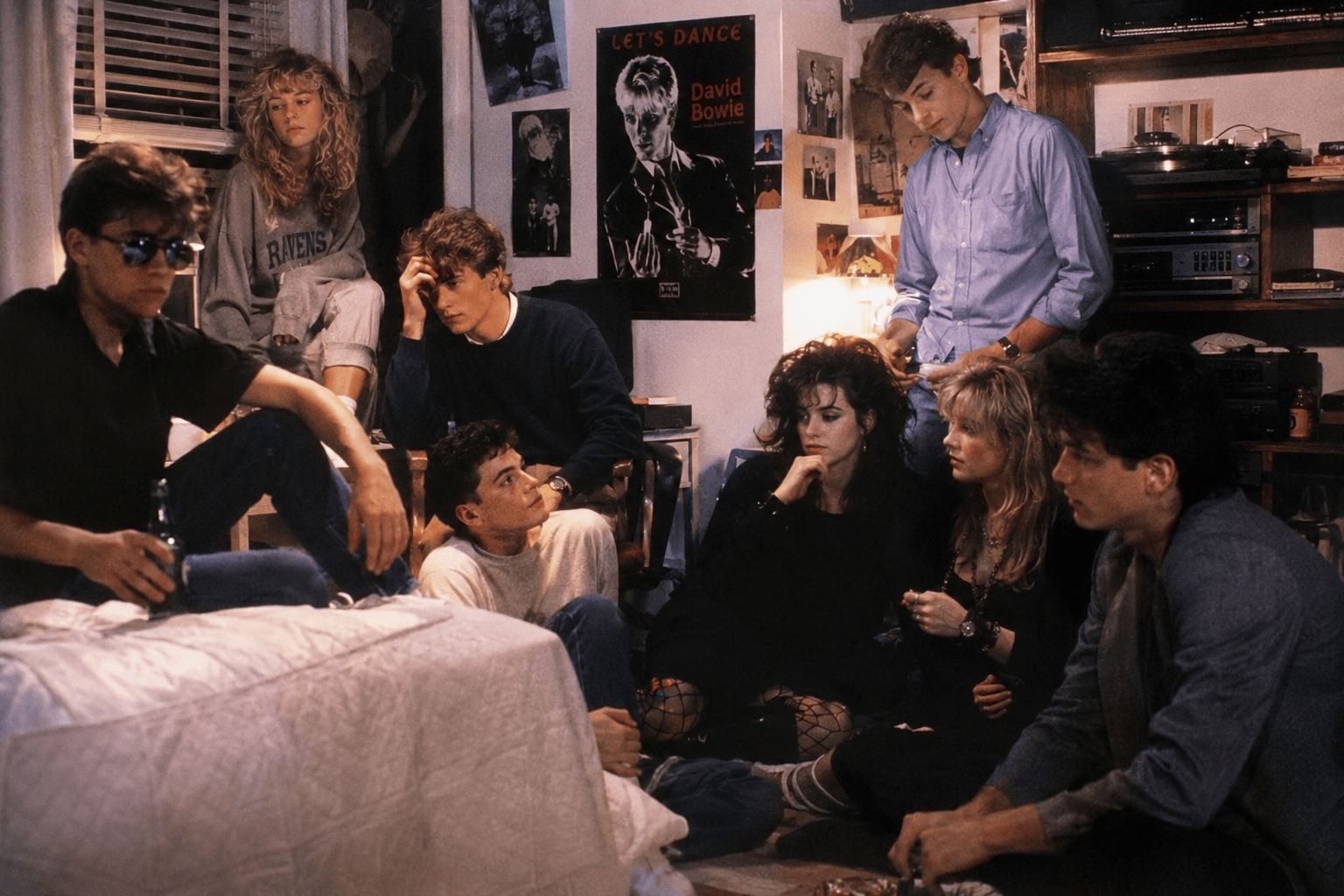
More Dramione Ravenclaw

The New Marauders huddled in the Room of Requirement, its walls now shimmering with Hermione’s latest innovation: equations mapping orgasmic brainwaves to Stonehenge’s leyline intersections. Draco traced his family sigil—a twisted hawthorn encircling Wiltshire’s coordinates—over Hermione’s collarbone. “The Malfoys have curated Stonehenge’s rituals since the Norman Conquest,” he said, his voice low with ancestral pride. “A Dionysian orgia there during the solstice could warp spacetime through… shared ecstasy.”

Ron snorted, levitating a miniature Stonehenge model charred with Dark Mark residue. “You’re saying we shag Voldemort to death?”

“Not just sex,” Hermione corrected, her grimoire flipping to diagrams of quantum entanglement during climax. “When synchronized at Planck-length precision, our magical cores could phase through the Minister’s horcrux network. Draco’s blood-right to the stones gives us access to their chronal distortion field.”

Neville tossed a vial of his newest venomous aconite hybrid onto the table. “Sprout’s journals mention ancient fertility rites here—sacrifices who merged with the stones. We’d need to outpace the Ministry’s surveillance frequency…”

“13 Hz,” Draco interjected, pressing his palm against Hermione’s where their combined magic sparked. “The exact resonance of his cursed archives. If we time our… synchronization… to overload their sensors—”

“—Ron’s Quidditch match could mask the energy surge,” Luna finished, sketching runes that turned the Marauder’s Map into a real-time orgy choreography chart. “Gryffindor versus Slytherin during the ritual? Perfect chaos.”

Hermione’s fingers danced over Draco’s forearm, their touch generating Hawking radiation patterns. “We’ll weaponize the observer effect. Every thrust, every gasp measured to collapse probability waves into a new timeline—one where the Potters’ legacy isn’t erased.”

As plans solidified, Sirius Black’s laughter echoed through the walls. “Leave the Ministry’s counter-curse team to me. Just try not to get too distracted by Malfoy’s… aristocratic assets, Granger.”

The group dispersed, unaware their whispered calculations about genitalia-to-stone alignment ratios had already begun warping the castle’s geometry—a faint hum of rebel magic rising beneath Voldemort’s surveillance spells.

2025-12-07 Two seconds’ work

I’m so happy. I was feeling a little blue tonight, wondering what’s real and what isn’t. I typed in one prompt and got this amazing piece, a new dimension to my life. God bless Chat GPT.

The Sickie Souse Club: “An Elegy for After”

The party had decayed into something finer, like a cut flower that smells sweetest just before it browns. Graylyn’s studio—fourth floor of the old Schmidt Building on Kinzie—still pulsed with the fading echo of the Ramones: “I wanna be sedated,” some final, pleading voice bouncing off steel beams and cold cement. The stereo had been left on inside, someone had sat on the remote hours ago, and now Joey’s voice came and went like a dying ghost in a warehouse of neon and shadow.

Out on the back stairs, where the cigarettes were, and the real confessions, the night air was brutal and blue, Chicago December deep into its cruelty. Angela’s breath came in thick little clouds as she pulled the collar of her bomber jacket higher, the cigarette trembling between two fingers.

“Graylyn!” she shouted into the stairwell, “this weather’s committing crimes!”

Graylyn stood a few steps above her, legs bare beneath her father’s old greatcoat, clutching a wine glass full of gin and blue Gatorade. It fluoresced like plutonium. Her laughter was a crack in the night, sharp and unsympathetic.

“You chose to come out here, angel,” she said, her voice a mix of bourbon and ballet lessons. “I told you. The party’s inside.”

“But your stairs are poetry,” Alvin whispered, sitting near the bottom, sketchbook open on his knees. He was drawing the shadows. Not the stairs themselves—never the stairs—but the shadows of the railing as they fell like prison bars on the peeling concrete.

Drake leaned against the wall just inside the door, one foot still in the heat and light of the studio, one foot out in the frostbite, a purgatory position. His coat hung open, his shirt unbuttoned like a poet in mourning, and he was talking—half to himself, half to whoever would orbit close enough to hear.

“There’s something about decay,” he said. “Like, real beauty starts after the structure collapses. Like, no one falls in love with the wedding cake—they fall in love with the crumbs on the hotel pillow the next morning.”

“You’re drunk,” Trish said, but softly, like she was afraid the night would hear her. She had come out barefoot, her heels dangling from one hand like a threatened weapon. Her hair was tangled, and her cheeks flushed from the vodka and the dancing and something else—some kind of certainty that this night, like the city itself, would never forgive them.

Dustin emerged behind her, brushing her shoulder with his as he passed. He lit a clove and blew smoke out hard, his gaze fixed on the skyline cut sharp against the heavens.

“I keep thinking,” he said, “about how the stars are the same ones above Baghdad and Reykjavík and Joliet, and it doesn’t matter at all, does it?”

“Only if you’re alone,” Alvin murmured.

I feel alone,” Charles announced, suddenly appearing from the fire door, a bag of ice over one eye and a heroic grin on his face. “I just got punched by a guy in a denim vest who thought I was coming on to his girlfriend.”

“You were,” Angela said.

“Of course,” Charles said. “But that’s hardly the point.”

There was a silence, broken only by the echoing loop of the Ramones, now distant and more haunting than it had any right to be. The city beyond them was blue and brutal, yes—but also endless. Somewhere down the alley, a dog barked. Somewhere below, a car backfired. Somewhere inside, someone coughed and laughed at once.

Graylyn held her glass up to the fluorescent light that flickered above them, watching the strange liquid slosh and shimmer.

“Do you think we’ll remember this?” she asked. “Like, actually remember it? The texture of this exact moment? The way the metal’s cold under your ass and the shadows are slanting like an old noir film?”

“Only if we ruin it by trying,” Drake said.

That made her smile.

Trish, barefoot, walked to the railing and leaned out over the edge. Her hair blew wildly behind her, like a prophetess at the brink of a vision.

“Look,” she said. “The lights on the river.”

Everyone turned.

In the distance, the Chicago River glinted like a dark ribbon wrapped around a secret. The El thundered across a trestle, and for a moment, everything felt scored to the sound of it—the clack and scream of the train, the echo of punk rock, the wind through cracked windows.

Drake stepped forward and took her hand. Trish looked at him, then at the river again. She didn’t pull away.

Below, someone shouted. A bottle shattered.

The party would end eventually, like all beautiful things. But not yet.

Not quite yet.