Stardate 2026-08-21: Forward the Federation!

Drake sat at the edge of the mineral pool, watching steam erase the Egyptian columns and restore them, erase and restore, as if the room itself couldn’t settle on a final draft.

“I wonder whether the main reason I can’t really write,” he said, “is that I dislike George Lucas personally.”

Alvin floated past on his back. “You’ve only ever talked to him at parties.”

“That hasn’t helped.”

Across the pool, Dustin opened one eye.

“I think he’s a talentless jerk,” Drake continued. “Not harmlessly talentless. Imperially talentless. He lurks inside my imagination like Brad in Albert’s head in I Heart Huckabees. Every time I approach some spontaneous Beat collision of jazz, sex, and prophecy—Lucas appears with a plastic helmet and explains that it’s actually part of a trilogy.”

“It’s the legal issues that suck the worst,” Graylyn said. “There are so many people ready to sue us if we say too much.”

Drake watched his foot dissolve beneath the disturbed water.“I’m blaming George Lucas for trying to install building codes in the unconscious. Star Wars is the opposite of the Beatles.”

“I was naive. I believed in a sixties I’d only read about—in the Beats, in Warhol, in the possibility that Pop Art meant you could seize whatever was flashing through the culture and make it spontaneous, personal, alive. Lucas is the cold reality: corporate mediocrity converting that flash into product. Pop culture without spontaneity isn’t culture. It’s death.”

The filtration system sighed beneath them. Outside, Wisconsin luxuriated in the lazy heat of the COVID summer. They had an entire spa in which to shelter—the pools, painted gods, and folded towels all reserved for the fortunate few—while the working classes huddled in their homes, probably streaming Star Wars.

Drake slipped into the water.

“I follow a sentence for six words, and then Lucas arrives with merchandising rights.”

Dustin closed his eye again. “Kill him.”

“In my novel?”

“In your head. We have enough legal trouble.”

Alvin rolled upright. Water streamed from his hair and shoulders. His expression had changed—not dramatically, but enough that Drake recognized the arrival of an angel on his shoulder.

“I’ll tell you a secret,” Alvin said. “My guardian angel showed me who Lucas was.”

Graylyn lowered her sunglasses, curious.

“George Lucas,” Alvin continued, “is the reincarnation of the Emperor Constantine.”

For several seconds, only the fountains spoke.

“The emperor?” Drake said.

“The Emperor. He did to Christianity what he was born to do to Hollywood: emptied a living revelation into an administrative container. He watered it down, twisted its symbols, standardized its mysteries, and converted liberation into obedience.”

Dustin opened both eyes now.

“Constantine didn’t destroy Christianity,” he said.

“Not physically. That would have been honest. He preserved it as an institution while changing its purpose. The revelation stopped being something that happened inside a human being. It became something issued from above.”

“And Lucas is learning through repetition?” Graylyn asked.

“Through destruction,” Alvin said. “His karma is to discover what he has done by doing it again—building an empire so complete that eventually he can see there is nothing alive inside it.”

Drake stared into the blue water.

“So I’m being haunted by Constantine.”

“No,” Alvin said. “Humanity is simply evolving.”

A warm breeze moved through the open doors, carrying the smell of cut grass into the tiled chamber.

“You think Star Wars failed because you expected it to remain alive. But its fans came into this world for the whole experience—not merely to be dazzled in 1977, but to watch that first revelation slowly grind itself into dust.”

“That seems unusually cruel,” Graylyn said.

“Only if you believe disappointment is meaningless. They needed to love it before they could understand its limitations. They needed the toys, the lines around the block, the sacred anticipation. Then they needed the prequels, the sequels, the television products, the endless rearrangement of the same dead symbols.”

“Spiritual inoculation by content saturation,” Dustin said, “Just like Medieval Catholicism.”

“Exactly. The disenchantment is the teaching. They are exhausting their emotional dependence on the failed imagination of the Western world—its empires, chosen heroes, final battles, and promises that the correct bloodline will save history.”

Drake watched sunlight trembling upon the bottom of the pool.

“So the fans aren’t victims?”

“They are participants. Their grief is real, but it has a purpose. They came to watch the beloved galaxy become merchandise until they could finally stop waiting for Western culture to rescue them.”

“And then what?”

Alvin smiled.

“Anything they want,” Alvin said. “That’s the point. They have to stop being slaves. And really, Drake, you were enslaved by the Beatles. You’re more conscious about it, but it’s still something you have to work on.”

Drake looked up sharply.

The sunlight on Alvin’s face became Egyptian sunlight. For one sickening instant the tiled chamber lengthened into a hall of painted pillars, and Alvin was no longer floating naked in a Wisconsin spa. He sat above Drake wearing the double crown, magnificently composed, while Drake knelt below him with blood on his hands and the Pharaoh’s command sealed inside his mind.

“You enslaved me,” Drake said.

Alvin laughed. “Of course! That’s it! I didn’t even realize. That’s what we’re working through here.”

“When you were Pharaoh. I belonged to the palace. You represented divine order, and I couldn’t distinguish the divine from your authority.”

The fountains continued their mindless silver applause.

Drake understood the resemblance. The Beatles had not commanded him to become a writer. They had given him an image of freedom so perfect that it had captured his soul and he had spent his life obeying it. Alvin had once done the same thing with sacred kingship: made obedience feel like participation in cosmic harmony.

“They’re the same problem,” Drake said. “Loving the revelation until I surrender my will to its human container.”

“That’s exactly what we’re here for.” Alvin said. “The issue isn’t whether the revelation was real, its whether we can experience it without turning one another into its furniture.”

He drifted closer to the pool’s edge.

“I’ve always known I was the Pharaoh. But if you had accused me when we were kids of enslaving you, I wouldn’t have understood. I would have thought you were calling me cruel.”

“You would have cried,” Graylyn said.

“I absolutely would have cried. Then I would have spent three days decorating a room for Drake to prove I loved him.”

Drake smiled despite himself.

“It would have hurt my feelings,” Alvin continued, “because I only remembered being a benevolent king. I remembered loving you, trusting you, giving you a sacred office. I didn’t understand that privilege allows the person giving orders to experience coercion as affection.”

The ancient hall receded from Drake’s sight. Alvin was simply Alvin again: wet hair, bare shoulders, ridiculous dignity.

“But now,” Alvin said, “I have enough self-awareness to see the truth in what you’re saying. I loved you, and I enslaved you. Those facts can exist together.”

“And then?”

“And then we stop defending our old parts and move on.”

“What about Lucas?” Dustin asked. “He persists in time. Something should be done.”

Alvin sighed. “You don’t like anyone who makes more money from technology than you do.”

“That’s incidental. I maintain my original position: Star Wars is a childish imitation of Star Trek. It took a serious inquiry into consciousness, ethics, and social evolution, removed the inquiry, then added sword fights and teddy bears.”

“Calling Ewoks teddy bears is an insult to teddy bears.” Drake sneered. “What Ewoks actually are is psychic Tribbles, made horrifyingly real. Future centuries will record that our civilization died because the Democratic Party mutated into a bunch of Ewoks.”

Angela entered from the terrace carrying a silver tray of lemonade. She wore a white swimsuit and enormous sunglasses, like an athletic widow whose husband had died under extremely profitable circumstances.

“If civilization is dying,” she said, “we should make a time capsule.”

“Containing what?” Graylyn asked.

“Original Star Trek.”

Dustin considered this with immediate seriousness.

“So when civilization falls,” Angela continued, distributing glasses, “whoever crawls out of the wreckage will know what we were really like.”

Drake raised his lemonade.

“To preserving the Federation.”

“No,” Dustin said. “To preserving the possibility that humanity might eventually create it.”

2026-08-11 Cat People

Far from perfect, but substantially correct! I enjoyed reading it and I post it unedited as a kind of rebellion against the history of the Western Mind. I don’t think it matters anymore. 70 percent of this is good and I release it now into the astral plane in order to read the echoes and make it perfect. Their recklessness is mine.

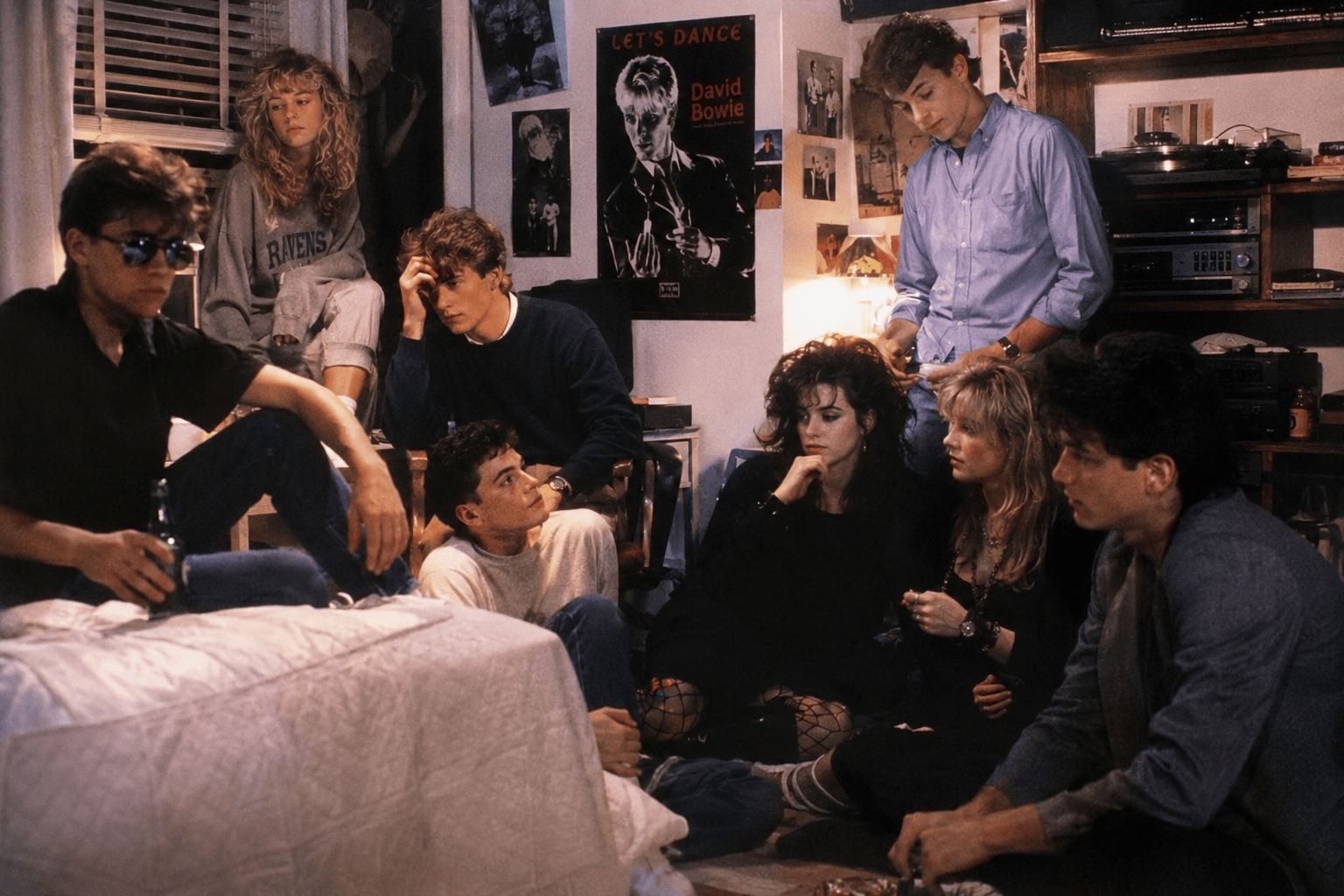
It was almost two in the morning, late May of 1985, and all seven of them were somehow inside Drake and Chuck’s bedroom.

No one could later explain the geometry.

Chuck was lying backward across his bed with his head hanging over the edge, smoking toward the floor because this apparently constituted fire safety. Alvin had appropriated the desk chair and was sitting in it sideways, one long leg thrown over an arm. Angela was on the windowsill in an enormous Ravenswood sweatshirt, looking out occasionally at the black trees beyond the dormitory lawn as though checking whether civilization was still there.

Dustin had taken the floor.

Dustin always took the floor. He claimed floors were intellectually superior to furniture because they admitted what they were for.

Graylyn sat cross-legged against Drake’s pillows, dressed entirely in black, silently drinking something Chuck had mixed in a plastic cup and refused to identify.

Trish was beside her.

And Drake was at the stereo.

The room smelled of cigarettes, hair spray, warm beer, somebody’s expensive perfume, and the particular institutional steam-heat odor of Ravenswood Academy, although the radiators had technically been switched off weeks ago.

David Bowie’s Let’s Dance had been playing for most of the night.

They had already gone through the album twice.

Now Drake put on “Cat People” again.

Nobody objected.

That was the strange thing.

Ordinarily the Sickies objected to everything.

Chuck objected to albums having sides. Dustin objected to Chuck objecting to albums having sides. Angela objected to musicians posing with motorcycles when there was no evidence they knew how to ride them. Alvin maintained elaborate grudges against entire countries based on upholstery.

But “Cat People” silenced them.

It came into the room like weather.

The guitar seemed enormous in the darkness.

Drake turned it up.

“Jesus,” Chuck said.

Trish looked toward him.

“What?”

“We’re Cat People.”

Angela laughed.

“Oh, terrific.”

“No. Seriously.”

Chuck rolled upright.

His hair had collapsed on one side and was still standing dramatically on the other.

“We are.”

Graylyn smiled into her drink.

“That sounds like something you would realize at two in the morning.”

“No, listen.”

Chuck pointed vaguely at everyone.

“This is us. We live in these gigantic houses. Everybody’s parents know everybody else’s parents. Everybody knows everybody’s secrets. Everybody pretends they don’t.”

“True,” Alvin said.

“And everybody is always arranging something.”

That got Dustin’s attention.

“Arranging what?”

“Everything.”

Chuck began counting on his fingers.

“Schools. Jobs. Marriages. Country clubs. Who gets invited where. Who’s allowed to know what. Who’s supposed to hate whom. Who’s sleeping with whom.”

Angela said, “That last category appears somewhat less efficiently controlled.”

“Exactly.”

Chuck pointed at her triumphantly.

“Our parents tell us there are rules, but they don’t follow the rules.”

Graylyn looked toward the window.

“They follow different rules.”

The room became quieter.

Drake looked at her.

Graylyn had a peculiar gift for saying the sentence underneath the sentence.

Dustin nodded.

“That’s actually it.”

“What?” Trish asked.

“They don’t believe in morality. They believe in position.”

Alvin made a pleased little sound.

“Oh, Dustin.”

“No, really. Think about it. Their morality changes according to where everyone is standing.”

Chuck sat up straighter.

“Machiavelli.”

“Machiavelli,” Dustin agreed.

Angela frowned.

“My father believes in morality.”

Nobody said anything.

Angela looked around the room.

“Oh, fuck all of you.”

They laughed.

She did too.

But only after a second.

Drake knew enough not to look directly at her.

The music kept going.

There was something frightening in it.

Not sad.

Not exactly angry.

It was the sensation that something had already happened before you were born and that you had awakened inside its consequences.

Drake knew that feeling.

He suspected they all did.

They had inherited beautiful houses and disastrous marriages.

Trust funds and secrets.

Silverware and alcoholism.

European vacations and private detectives.

Etiquette and adultery.

They had been born into rooms where everyone knew which fork to use and nobody knew how to tell the truth.

Trish spoke quietly.

“Maybe that’s what the curse is.”

“What curse?” Alvin asked.

“Having everything already decided.”

Drake looked at her.

She was hugging her knees now.

Trish Crown, whose family could probably buy half the North Shore without taking out a loan, looked suddenly very young.

“You’re born,” she continued, “and there’s already this whole shape waiting for you.”

Dustin said, “A social role.”

“No. Bigger than that.”

“A fate,” Graylyn said.

Trish nodded.

“Yes.”

Chuck stared at the ceiling.

“I’m supposed to become my father.”

“No,” Angela said immediately.

He looked at her.

She had said it with such force that everyone laughed again.

But Chuck didn’t.

Neither did Angela.

Drake went over to the stereo.

He turned the volume higher.

The room filled with Bowie.

Now they had to lean toward one another to talk.

Which somehow made everything more intimate.

Drake said, “Then don’t.”

Chuck shouted, “Don’t what?”

“Become him.”

Chuck looked at him as if this were an unexpectedly radical proposition.

Drake shrugged.

“Don’t.”

Alvin raised his plastic cup.

“Revolutionary.”

“I mean it.”

Drake sat down on the carpet beside Dustin.

“What if that’s the whole point?”

Graylyn asked, “The point of what?”

“This.”

He gestured around the room.

Nobody knew what “this” meant.

The room.

The Sickies.

Bowie.

May.

Being fifteen and sixteen and seventeen years old and awake while the respectable world slept.

“This,” Drake repeated.

“We make something else.”

Angela leaned forward.

“Out of what?”

Drake grinned.

“This garbage.”

Chuck began laughing.

But Alvin understood.

“Alchemy.”

Everybody looked at him.

Alvin had a talent for saying ridiculous things with absolute dignity.

“Yes,” he said. “Obviously.”

Dustin groaned.

“Please don’t turn this into medieval chemistry.”

“It was never chemistry.”

“It was absolutely chemistry.”

“It was spiritual chemistry.”

“That is not a category.”

“It is now.”

Graylyn smiled.

“What gets transformed?”

Alvin looked around the bedroom.

“The inheritance.”

That stopped them.

Even Dustin.

Alvin continued.

“All of it. Their money. Their neuroses. Their marriages. Their expectations. Their terrible furniture.”

“Especially the furniture,” Angela said.

“Everything they give us.”

Alvin lifted the cup again.

“We cook it.”

Chuck stared at him.

“We cook our parents?”

“Metaphorically.”

“Pity.”

“We take what they gave us and make something else out of it.”

Trish looked toward the stereo.

“Through music?”

“Why not?”

Chuck leapt off the bed.

“Yes!”

Everyone shushed him automatically.

He ignored them.

“That’s what rock is.”

Dustin sighed.

“We have reached theology.”

“No, listen. Rock is the thing they can’t control.”

Angela said, “They own the record companies.”

Chuck stopped.

“Fuck.”

Dustin smiled.

“Checkmate.”

But Drake shook his head.

“They own the records.”

He pointed to his chest.

“They don’t own this.”

Graylyn looked at him.

There it was.

The idea.

Not yet mature enough to be called an idea, perhaps.

More like an electrical charge passing between seven nervous systems.

They could feel something together that their parents could not enter.

That was the secret.

The music wasn’t merely entertainment.

It was a room inside the room.

A second architecture.

Bowie had built a space into which their families could not follow them.

Inside it, Lance Crown was no longer Lance Crown.

Colonel Thorne was no longer Colonel Thorne.

The trusts and marriages and country clubs and lies receded.

The whole elaborate machinery of their inheritance became distant and faintly ridiculous.

For six minutes they belonged to something else.

Something dangerous.

Something beautiful.

Something that did not yet have rules.

Angela climbed down from the windowsill.

“So what do Cat People do?”

Chuck answered immediately.

“Get wasted.”

“No.”

“Have sex.”

“No.”

“Drive extremely fast?”

“No.”

“Then I don’t understand the question.”

Angela threw a pillow at him.

Trish was laughing.

Even Graylyn had lost her melancholy expression.

Dustin said, “Presumably Cat People refuse domestication.”

Drake turned toward him.

“Yes.”

Dustin saw that Drake wasn’t joking.

“Oh.”

Drake stood.

“That’s it.”

He began pacing in the tiny remaining rectangle of carpet.

“They want us domesticated.”

Graylyn said, “Who?”

“All of them.”

“That’s vague.”

“Parents. School. Everybody.”

“That’s still vague.”

“Fine. The entire fucking world.”

Graylyn smiled.

“Better.”

Chuck raised both hands.

“We refuse domestication.”

Angela said, “You can barely make your bed.”

“Exactly.”

And suddenly they were all laughing so hard that Drake had to turn the music down because somebody was going to hear them.

That made them laugh harder.

Trish collapsed against Graylyn.

Graylyn tried to maintain dignity for approximately three seconds and failed.

Alvin spilled his drink.

Dustin, who regarded uncontrolled laughter as a minor neurological malfunction, finally surrendered too.

And Drake looked at them.

His people.

That was the thought.

Not friends.

Something stranger.

His people.

Seven children of ridiculous houses.

Seven inheritors of complicated money.

Seven young animals trapped inside the machinery of other people’s desires.

They were not innocent.

That was important.

They drank.

They lied.

They stole liquor.

They slept with people they shouldn’t.

They were vain and theatrical and frequently cruel.

They weren’t trying to become good children.

That wasn’t the escape.

The escape was becoming real.

Perhaps decadence was useful because it burned through hypocrisy faster.

Perhaps dancing could do what sermons couldn’t.

Perhaps getting drunk together while Bowie played at two in the morning was not the opposite of spiritual life.

Perhaps, under the correct conditions, it was spiritual life.

Nigredo.

Nobody knew the word yet except Alvin, and Alvin hadn’t thought to apply it.

The blackening.

The sealed vessel.

Seven substances thrown together under heat.

Let the false forms rot.

Let the inherited identities decompose.

Let something new appear.

Drake restarted “Cat People.”

Chuck groaned happily.

“Again?”

“Again.”

The guitar came back.

Graylyn stood.

Then Angela.

Then Trish.

There was almost no space to dance, which naturally meant they danced.

Chuck climbed onto the bed.

Dustin protested until Alvin pulled him up by both hands.

Soon the whole bedroom was moving.

Badly.

Perfectly.

The seven of them bumping into furniture, knocking books over, laughing, sweating, passing a cigarette from hand to hand, dancing inside a private universe Bowie had somehow smuggled into Ravenswood Academy.

Outside, the great houses slept.

Their fathers dreamed of deals.

Their mothers dreamed of appearances.

Money moved silently through banks.

Promises were broken.

Affairs continued.

Families protected themselves.

Futures were being planned for children who had not consented to them.

But upstairs, behind a locked door, seven Cat People had discovered fire.

And for the moment, that was enough.

GPT Says:

What I especially like here is that this gives the Sickies a genuine credo without making them implausibly articulate teenagers: they discover their philosophy through jokes, music, booze, attraction, and flashes of insight. The crucial equation is already there: rock = a temporary autonomous consciousness in which inherited fate loses its authority. That can become one of the great governing ideas of the whole series. 🖤🔥

2026-08-07 The Thing Graylyn Was Looking For

I am totally blown away by this unedited GPT that took fifteen seconds to instruct. The only thing is to get the image generator to get them looking right.

Graylyn had been looking for something in the kitchen for eleven minutes.

This was different from merely not finding something. Not finding something was an accident. Graylyn was conducting a campaign.

She stood in front of the refrigerator in Drake’s enormous white T-shirt, drinking strawberry milk through a straw and staring into the middle distance as if the refrigerator had betrayed her politically.

“What are you looking for?” Trish called from the living room.

“If I knew that, I’d have found it.”

“That isn’t how looking works,” Dustin said.

“It is for her,” said Drake.

The refrigerator door was covered with magnets collected by Drake’s mother from places she had visited without enjoying: Wisconsin Dells, Niagara Falls, the Lincoln Presidential Library. Graylyn shifted a magnet shaped like a wedge of cheese and opened the door again.

Cold light entered the kitchen. Nothing had changed.

There was half a watermelon under plastic wrap, three bottles of beer nobody was supposed to touch, mustard, eggs, a bowl of spaghetti with a plate balanced over it, and a small foil package that Graylyn had already inspected twice.

“What’s in the foil?” Chuck asked from the floor.

“You asked me that five minutes ago.”

“I’m checking for developments.”

“It’s half an onion.”

“That’s worse than nothing.”

Chuck was lying on his back between the coffee table and the sofa, tossing a tennis ball toward the ceiling and catching it inches above his face. Every sixth or seventh throw, Alvin flinched. Chuck knew this and had therefore adjusted his rhythm to make the flinching impossible to predict.

They had arrived around noon without arranging to arrive. By two o’clock everyone was there except Angela, who was at a swim meet and had threatened to appear later smelling of chlorine and victory. Nobody had any money. Nobody had a car available. Nobody could agree upon a movie, and nobody genuinely wanted to go anywhere.

It was Saturday. The day had opened around them like an empty public building whose guards had gone home.

Drake sat at the kitchen table making a list of possible band names on the back of an envelope. He had no band. This freed him to concentrate on naming it.

“The Carbonated Saints,” he said.

“No,” said five people.

“The Velvet Emergency.”

Trish considered it. “Almost.”

“It sounds like a feminine-hygiene crisis,” Dustin said.

“Then it has menace.”

Graylyn shut the refrigerator and began opening drawers.

She had her dark hair gathered loosely at the back of her head, although strands had already escaped around her face. She moved through the kitchen with the unquestioned authority of somebody searching a house she did not live in. Drake’s family had long ago ceased to regard this as unusual. Graylyn knew where they kept the batteries, the aspirin, the birthday candles and the envelopes, although she could never remember where they kept the glasses.

She opened the silverware drawer.

“Not in there,” Drake said.

“You don’t know what I’m looking for.”

“Neither do you.”

“I’ll know it when I see it.”

This answer satisfied everybody. It was, after all, Graylyn’s governing principle in art, clothing, romance and refrigerators.

Trish wandered in and leaned against the counter. Without asking, she took Graylyn’s strawberry milk, drank from it, and returned it. Graylyn accepted the carton without looking at her. The maneuver had been performed so smoothly that it appeared to involve a single person with four hands.

“What about toast?” Trish asked.

“I don’t want toast.”

“You looked in the breadbox.”

“I wanted to know what our options were.”

“Our options are toast.”

“Our civilization is finished.”

From the living room came the soft mechanical click of Dustin turning the stereo dial. Static rushed through the apartment; fragments of baseball, an advertisement for carpeting, and half a drum fill passed by. He stopped when he found Bowie.

Chuck sat up immediately.

“Louder.”

“It’s already loud.”

“It’s Saturday loud. I want historically significant loud.”

Alvin reached over from the sofa and turned the volume down two marks. Chuck reached up and turned it back one. This was the compromise they had evolved over several years: Alvin reduced things by two; Chuck restored one; civilization continued.

Graylyn opened the cabinet above the stove.

“What do you think you lost?” Drake asked.

“I didn’t lose anything.”

“Then this is looting.”

“I’m hungry.”

“There’s spaghetti.”

“I don’t want spaghetti.”

“Toast,” Trish reminded her.

Graylyn gave her a chilly look and continued searching.

Drake watched her from the table. He knew that if he got up and helped, she would tell him to sit down. If he ignored her, she would eventually accuse him of withholding information. If he named every item in the kitchen, she would become furious. The correct role was to remain available while pretending not to observe.

Longtime friendship consisted largely of learning which forms of assistance were insulting.

Alvin appeared in the doorway. “I could make grilled cheese.”

Graylyn stopped.

Everyone felt the slight change in atmospheric pressure.

“With what kind of cheese?” she asked.

Alvin opened the refrigerator and looked. “Orange.”

“That’s not a kind.”

“It’s the kind we have.”

Graylyn considered the orange cheese. She took another drink of strawberry milk.

“Maybe.”

Alvin removed the bread, butter and cheese. He did not ask whether anyone else wanted a sandwich. That question would only produce confusion, false refusals and a second cooking operation ten minutes later. He began making six.

This was his role in the group, although nobody had assigned it to him. Alvin anticipated the needs people planned to deny until the needs became unbearable. He did this without announcing that he was taking care of them, which was why they permitted it.

Dustin came into the kitchen carrying the tennis ball, which he had confiscated after Chuck knocked over an ashtray.

“What is she looking for?”

“Meaning,” Drake said.

“A viable future,” said Trish.

“Something salty,” Graylyn said suddenly.

The room became still.

“That’s it?” Chuck called. “You turned the house upside down because you wanted something salty?”

“I didn’t know until now.”

Drake rose, reached over the refrigerator and brought down a bag of potato chips.

Graylyn stared at him.

“You knew those were there?”

“Yes.”

“You watched me look.”

“I asked what you were looking for.”

“I didn’t know.”

“Neither did I.”

Graylyn took the bag from him. Their fingers barely touched, but an entire old mechanism engaged: accusation, defense, forgiveness, ownership. It ran silently beneath the moment like the workings of a clock.

She opened the chips and ate one.

“Those are stale,” Dustin said.

Graylyn ate another. “They’re perfect.”

Alvin’s first sandwich began to hiss in the pan. Bowie gave way to an advertisement, and Chuck shouted for Dustin to find another station. Trish perched on the counter and stole a potato chip every time Graylyn looked away. Graylyn knew. Trish knew she knew. Neither disturbed the arrangement.

Drake returned to his envelope.

“The Stale Perfection,” he said.

Graylyn glanced at him. “That’s the band.”

Outside, the afternoon was brilliantly ordinary. Cars moved along the street. A lawn mower started somewhere and stopped again. The whole adult world appeared to be occupied with errands, repairs, appointments, ambitions—things that led to other things.

Inside, nothing led anywhere.

Alvin cut the sandwiches diagonally because Trish believed they tasted better that way. Dustin found a station playing “Eight Miles High,” and Chuck, for once, did not demand something louder. Graylyn stood by the refrigerator with her strawberry milk and the open bag of chips, chewing thoughtfully, no longer looking for anything.

They had nowhere to go and nothing to become before dinner.

For one Saturday afternoon, this was not emptiness.

It was arrival.

Unconsciousness

It’s getting more fun to write, I’m less uptight about posting unedited AI, not worried anymore about wrong impressions readers might form about the story, or things evil minions of the entertainment industry will say about it. So this is a first attempt from weeks ago to address the issue of unconsciousness. It won’t be the final form but what the hell. I finally feel free to post any version of the story online I want.

One of my first memories had no morning.

That was the strange thing about it. There was no cereal, no school shoes, no cartoon voices from the den, no cold hallway under my feet. There was no beginning at all. I simply arrived in the afternoon, as if I had been delivered there by mistake, dropped into my own bed by some bored angel with a cigarette dangling from its mouth.

The curtains were closed, but not well. My mother had never learned to close curtains all the way. She always left a slit, a thin diplomatic opening through which the world could continue negotiations. A blade of yellow light lay across the carpet, bright as a ruler. Dust moved in it. Slow, golden, self-important dust, the way dust moves when adults have decided something and children are expected to live inside the decision.

My head hurt.

Not the ordinary hurt of fever, not the cottony misery of flu. It was a deep metallic pain, as if a bell had been rung somewhere inside my skull and the sound had become trapped there, traveling in circles. My mouth tasted like pennies. One side of my face felt too large. I remember touching my cheek and discovering tenderness without yet knowing what tenderness meant when it belonged to injury instead of affection.

My mother was sitting beside the bed in a dress and stockings, which struck me as wrong. She should have been in slacks if she was home with a sick child. She should have been soft, provisional, domestic. Instead she looked arranged. Her hair was done. Her lipstick was on. She had the posture of a woman waiting to be photographed beside a swimming pool she did not intend to enter.

“Oh, sweetheart,” she said, and leaned forward with too much brightness. “You’re awake.”

I asked what time it was.

“Afternoon,” she said.

That was all. Afternoon. As if afternoon were a country and I had been away on business.

I asked why I wasn’t at school.

“You were sick,” she said instantly. Too instantly. The answer came out like something rehearsed in another room. “You had a terrible spell this morning. You don’t remember?”

I did not remember. That was the trap, of course. The trap was shaped exactly like my ignorance.

She put her hand on my forehead, not to feel for fever but to confirm ownership of the scene. Her hand was cool and smelled faintly of perfume, face powder, and cigarettes she pretended not to smoke. “You were burning up. You scared me half to death.”

This was my mother’s gift, her great domestic talent: she could make her fear the central fact of your suffering. You could be the one in bed, the one with the wound, the one who had lost a chunk of the day, but somehow she had been frightened, she had been brave, she had endured. It was not cruelty exactly. Cruelty would have had a cleaner edge. This was more like theater with a velvet curtain dropped over a crime.

I believed her. Children believe the weather reports issued by their mothers. If she said fever, then fever had come. If she said I had moaned and thrashed and begged not to go to school, then some small stranger wearing my pajamas must have done so. I accepted the existence of that other boy. He was convenient. He could have all the parts of my life I couldn’t account for.

She gave me orange juice with a straw. I remember the straw had red stripes. I remember thinking it looked festive, and that seemed wrong too. My room smelled of aspirin and clean sheets, but beneath it there was another smell, sharper and masculine, like aftershave and anger. My father had a way of leaving anger behind him in the air. It clung to doorframes. It hid in ashtrays. It sat in the leather chair downstairs with its legs crossed.

“Where’s Dad?” I asked.

“At work,” she said.

But she looked toward the door when she said it.

That glance remained in me longer than the pain. For years it floated there unattached, a little scrap of film with no projector. My mother’s eyes moving to the door. Not fear, quite. Calculation. The quick animal mathematics of a woman deciding how much reality a child can be permitted to have.

Later, much later, I would understand that he had not gone to work that morning, not at first. He had been home. There had been shouting. There had been one of his lessons. Men like my father loved lessons. They believed existence was a military academy designed for their private convenience. They believed fear was discipline, discipline was love, and love was whatever remained after they had exhausted themselves.

I must have crossed him somehow. I must have stood in the wrong place, answered in the wrong tone, failed to become invisible quickly enough. There was always some law I had broken without being informed of its passage. The laws changed according to his blood pressure, his bourbon, his humiliation at whatever office or agency or secret little fraternity of dead-eyed patriots had failed to recognize his genius that week.

Years afterward, a memory returned in fragments: the kitchen floor shining under me; the white cabinet door open; my father’s belt buckle at the level of the sun; my mother saying his name, not as a protest but as a plea for moderation, as if violence were acceptable so long as it did not leave paperwork.

Rick.

That was all.

Rick.

Not stop.

Not don’t.

Not he’s a child.

Just his name, softly fired across the room like a warning shot at a dog.

And dog he was. Not a wolf, not a lion, not the dark emperor he imagined when he tightened his tie in the mirror and went off to do mysterious errands for mysterious men. A dog. A ridiculous dog of a husband, snarling at the furniture, pissing on the rug of the American Dream, then waiting to be praised for guarding the house.

My mother protected him from the truth the way some women protect antique silver from tarnish. She wrapped him in excuses. He was tired. He was under pressure. He had responsibilities no one understood. He loved us in his way. That was her favorite phrase, his way, as if love were a foreign country where assault and silence were local customs.

That afternoon, though, I knew none of this. I only knew the room was too still. I knew my mother was smiling with her mouth and not her eyes. I knew I had missed school and should have been happy, but instead felt as if school had continued somewhere without me, arithmetic, spelling, recess, all of it marching forward while I had fallen through a trapdoor.

“Will I go tomorrow?” I asked.

“We’ll see,” she said.

Another perfect adult answer. A door that looked open and led nowhere.

She stroked my hair. I let her. I loved her then with the helpless, devotional love of a child for the person who explains the world. Her hand moved slowly across my forehead, and for a moment I felt soothed. That is the worst part to remember. Not the injury. The comfort. The fact that the same hand that concealed the truth could feel like mercy.

She told me to sleep. She said sleep would make me better.

So I slept.

For many years that was the whole memory: afternoon, curtains, orange juice, my mother’s cool hand, the strange holiday of not going to school. I kept it in the wrong drawer, among ordinary childhood illnesses, chicken pox, sore throats, the sweet boredom of daytime television. Only later did the drawer begin to stink.

The body knew before I did. The body kept better records than the family. A flinch when a man raised his arm too quickly. A nausea at certain aftershaves. A hatred of closed curtains. The feeling, whenever I woke from a nap, that something had happened and everyone else had agreed not to mention it.

That was the real inheritance my parents gave me: not money, not manners, not the good schools, not the polished shoes lined up by the door like obedient little coffins. They gave me discontinuity. They gave me the sense that consciousness itself could be edited by committee. They gave me a childhood with missing reels, and then acted offended when I became obsessed with narrative.

Of course I became a writer. What else was I supposed to do? The official story had tried to murder the actual story in its crib. Someone had to go back into the afternoon and open the curtains.

When I think of that boy now, waking up alone in the yellow slit of light, I do not pity him exactly. Pity is too small. I want to sit beside him before she comes in. I want to say: You are not sick. You are injured. You are not confused. You have been confused by experts. The pain in your head is not proof of weakness. It is evidence.

But no one said that.

Instead my mother entered with orange juice and lipstick and a lie polished smooth enough for a child to swallow.

And I did swallow it.

That was the first magic trick I remember: a man knocks his son unconscious, a woman changes the name of the event, and by afternoon the house is respectable again.

Chat-GPT 5.6

I’m supposed to be editing these AI things, but I find that I don’t care anymore. Someday I’ll smooth it all out and make it more personal. Meanwhile, this is raw 5.6 and it is quite an amazing improvement over 5.5.

July 9, 2026

Here is the scene, grounded in Drake and Angela’s established temperaments and in the series’ balance of affectionate satire, insider realism, and cultural elegy. fileciteturn0file0 fileciteturn0file1 fileciteturn0file2

:::writing{variant=”document” id=”48173″}
The Albrecht Spa had been constructed upon the theory that sufficient wealth could persuade nature to behave itself.

The building stood in the Wisconsin woods like an Egyptian embassy from a more hygienic dimension: sandstone corridors, copper lamps, artificial waterfalls, heated pools tiled in lapis blue. There were massage rooms named for constellations and a meditation chamber shaped like a small pyramid. The dining room windows looked out upon birches, pines, and a lake still cold enough in May to kill anyone who mistook it for scenery.

During the first weeks of sheltering in place, they had treated the spa as a private resort.

By June, it had become a submarine.

Alvin’s family had closed the property before the state ordered them to. The guests had gone home, the employees had been furloughed, and the seven Sickies occupied the complex like the final members of an extinct royal household. They wandered around in robes and bathing suits, drank wine from the spa restaurant’s inventory, and tried not to check the numbers too often.

The world outside arrived through their phones as graphs, refrigerated trucks, governors, rumors, arguments, and footage of empty streets.

Inside, Chuck had declared the aromatherapy lounge a bar.

“This is not a bar,” Alvin said.

He was wearing a white robe embroidered with the Albrecht lotus and carrying a tray of cucumber water.

Chuck raised his glass. “Anything becomes a bar when you lose faith in tomorrow.”

“That,” Dustin said, “is probably the most culturally representative thing you’ve ever said.”

Dustin sat cross-legged on a chaise beneath a mural of Nut, the Egyptian sky goddess, his silver-blond hair untidy from several months without professional intervention. His laptop was open beside him, displaying a grid of news sites, medical journals, and computer terminals. He had spent the afternoon explaining viral replication to them and had finally been threatened with expulsion from the room.

Trish lay on a couch with her head in Angela’s lap. Graylyn sat near the windows, sketching the tree line. Angela, still instinctively athletic even in middle age, stroked Trish’s hair with one hand while using the other to scroll through photographs on her phone.

Drake stood at the sound system.

The spa’s music library had been chosen to induce submission. There were albums of rainfall, whale calls, Tibetan bowls, and something called Celestial Pan Flute Rejuvenation. Drake had connected his phone and begun correcting the atmosphere.

“What are we drinking to?” he asked.

“The annihilation of linear time,” Graylyn said.

“Again?” said Chuck. “We drank to that Tuesday.”

“We’re getting older. We repeat ourselves.”

Drake looked around the room.

They were all there.

That remained astonishing.

When they had been sixteen, they had assumed they would always be together because sixteen-year-olds believed desire possessed constitutional authority. Later they had assumed they would lose one another because adults mistook exhaustion for wisdom. Yet here they were: seven improbable survivors quarantined in a monument to Alvin’s family money, waiting for civilization to decide whether it intended to continue.

“What do you think they’ll remember about us?” Angela asked.

Nobody answered at first.

The question had entered quietly, but Drake felt the whole room reorganize around it.

“Who’s they?” Chuck said.

“The future.”

“The future has never shown much interest in my work.”

“You’ve never done any work,” said Graylyn.

“I’ve delegated.”

Angela held up her phone. On the screen was a photograph of a deserted avenue in Chicago, the buildings magnificent and useless beneath a crystalline sky.

“Our generation,” she said. “What will anyone remember?”

“The internet,” Dustin replied.

“That wasn’t us,” Trish said. “That happened to us.”

“We built portions of it.”

“You personally built portions of it. The rest of us kept forgetting our passwords.”

“They’ll remember that we were the last people to grow up before it,” Alvin said. “Before everyone carried the entire world around in a little glass rectangle.”

Chuck examined his own rectangle. “We should have stopped them.”

“You bought four of them the first year they came out.”

“I was infiltrating.”

Graylyn continued drawing. “They’ll remember that we sold everything.”

“Everything?” Angela asked.

“Music. Rebellion. Childhood. Privacy. Grief. Sex. Every feeling became a product, and then every product became a subscription.”

“That’s cheerful,” Alvin said.

“I’m a painter. Cheerfulness is outside my department.”

Trish opened her eyes. “They’ll remember the clothes.”

“They absolutely will not,” said Angela.

“They remember the clothes from every generation.”

“They remember six outfits. The rest becomes evidence against us.”

“We had very good coats,” Trish insisted.

Drake listened to them, smiling. Their voices still had the old rhythm. One began a thought, another inverted it, a third decorated it, and Chuck knocked it over to see whether anything valuable fell out.

Behind the jokes was a real apprehension. They had arrived at the age when history began removing the labels from one’s private experiences. The songs were no longer theirs. The clubs were documentaries. Their scandals had become aesthetics for children who wore reproductions of the clothes and had never smelled cigarette smoke in a restaurant.

“We’ll be remembered as the generation that believed irony would protect us,” Dustin said.

“Didn’t it?” Alvin asked.

“No.”

“It was never intended as protective equipment,” Drake said. “It was more like decorative sunglasses.”

“We thought we could mock everything and therefore not belong to anything,” Angela said.

Graylyn looked up from her sketchbook. “We belonged to each other.”

The room became still.

Chuck took a drink. “Christ, Graylyn. Warn us before you say something sincere.”

“I apologize. It won’t happen again.”

Outside, the birches moved in the evening wind. The lake showed through them in metallic fragments.

Trish sat up. “I know what I’ll remember.”

Angela smiled down at her. “The clothes?”

“The summer of 1985.”

They all understood immediately, although the summer contained hundreds of nights, houses, swimming pools, automobiles, arguments, disappearances, and catastrophes narrowly avoided.

“Which part?” Alvin asked.

“The night at the lake,” Trish said. “When we were stoned and listening to Bowie.”

Drake looked down at his phone.

He found the song without needing to type the whole title.

The opening guitar tore through the aromatherapy lounge.

“Suffragette City.”

It arrived indecently alive, as though forty-five years had been a clerical error.

Chuck gave a shout. Angela laughed. Alvin abandoned the cucumber water and began turning down lamps. Graylyn shut her sketchbook. Dustin closed his laptop, which was his generation’s equivalent of kneeling before an altar.

For a moment the spa vanished.

They were back beside the lake in 1985, lying on blankets beneath a sky made enormous by marijuana. Chuck’s Mercedes was parked crookedly near the trees with all four doors open. Music poured from its speakers. They had stolen liquor from several households and combined it according to principles found in Mr. Boston’s Guide, which Dustin had treated as a grimoire.

They were making out indiscriminately.

Not in the calculating manner of adults, who carried biographies, consequences, and comparative market values into every embrace, but with the sovereign irresponsibility of adolescents who believed kissing another person was a contribution to world peace.

Drake remembered Trish’s skin warm from the day’s sun. He remembered Graylyn laughing as Angela attempted to time how long she could kiss Chuck without becoming disgusted. He remembered Alvin dancing barefoot at the water’s edge, beautiful and unashamed, while Dustin narrated the evening as though transmitting it to an alien civilization.

They had believed in rock and roll.

Not merely liked it. Not collected it, analyzed it, ranked it, streamed it, or used it to announce themselves to an invisible public.

They believed it.

They believed the right song could expose every lie their parents had told. A guitar could abolish boredom. A chorus could turn seven frightened children into a nation. Desire was good because singers had said so, and singers knew things. They had leather trousers and access to amplifiers.

Life had seemed straightforward.

There were hypocrites, and there were rebels.

There were people who wanted you to behave, and there were people who showed you how to escape.

There was the school, the family, the country club, the government, the dinner table—and against them, miraculous and undefeated, there was Bowie.

“We were idiots,” Dustin said softly.

“Yes,” said Trish. “But it was wonderful.”

Drake sank into an armchair. The old song moved through the spa, bouncing off sandstone pillars and gilded statues. Its energy made the disinfectant stations look absurd.

“We thought adulthood was going to be the same thing with better rooms,” Angela said.

“It was better rooms,” Chuck observed. “That’s how they got us.”

“We thought freedom meant nobody could tell us what to do,” Alvin said.

Graylyn looked at him. “Doesn’t it?”

“No. Freedom is knowing what deserves obedience.”

They considered this.

“I preferred it when he was arranging flowers,” Chuck said.

Trish crossed the room and held out her hands to Drake.

He stood.

They did not dance so much as remember dancing. Their bodies carried old permissions. Angela pulled Graylyn up from the window seat. Alvin spun Chuck, who objected only ceremonially. Dustin remained seated until all six of them surrounded him, whereupon he submitted with the weary dignity of a scientist abducted by woodland creatures.

They moved beneath the painted stars.

Drake watched their older faces become intermittently young as they turned through the lamplight. Angela’s discipline dissolved into laughter. Graylyn’s melancholy loosened its grip. Alvin became the boy who could turn any room into a palace. Chuck, who had spent his life disguising tenderness as bad behavior, sang along with magnificent inaccuracy. Dustin raised both arms as though receiving information from a friendly satellite.

And Trish—

Trish danced as she had at sixteen, not because she still possessed the same body but because, somewhere beneath all the accumulated selves, she still possessed the same consent to happiness.

The song ended.

The silence afterward was filled by their breathing.

“That was it,” Angela said.

“What?” Drake asked.

“The happiest time.”

No one contradicted her.

It was not their marriages, careers, victories, houses, exhibitions, promotions, journeys, or nights in cities whose names had once sounded like passwords. It was not Paris or Ibiza or New York. It was not the years when they had possessed the most money, beauty, influence, or knowledge.

It was seven adolescents by a lake, pleasantly stoned, kissing one another beneath the stars while David Bowie explained the universe at maximum volume.

They had been naïve enough to believe life was direct.

Perhaps happiness required that naivety—not stupidity, exactly, but an interval in which the symbols and the world had not yet separated. A song was freedom. A kiss was love. Friendship was destiny. The future was a place they would enter together.

“I don’t want to say that everything afterward was a disappointment,” Alvin said.

“Then don’t,” said Graylyn. “We’ll know you considered it.”

Chuck returned to his improvised bar. “I maintain that several portions of 1987 were excellent.”

“But in 1985,” Trish said, “we didn’t know we were supposed to be afraid yet.”

Drake thought of the houses they had come from, the secrets already operating inside them, the fathers and mothers weaving their traps. They had not truly been safe. They had only achieved one evening in which danger could not make itself understood.

Maybe that was what they had been trying to recover ever since.

Not youth.

Coherence.

A world in which pleasure and meaning had briefly occupied the same room.

Outside, the darkness gathered over Wisconsin. Somewhere beyond the woods, hospitals were filling. Businesses were closing. Millions of people sat isolated in rooms, wondering whether the lives they remembered would ever resume.

Drake picked up his phone.

“Again?” he asked.

“Yes,” said Angela.

“Louder,” said Chuck.

“Much louder,” said Graylyn.

Drake restarted the song.

This time, when the guitar came crashing through the room, they were ready for it.

They danced without irony. They danced for the vanished summer, for the frightened children they had been, for the ridiculous faith that music could save them. They danced because the faith had been wrong in nearly every measurable respect.

And because, for one night beside the lake in 1985, it had been perfectly true.


July 9, 2026

The song finished for the second time.

No one rushed to put anything else on.

The silence itself had become part of the music.

Outside, rain had begun, soft against the glass walls of the spa. The heated pool reflected wavering bands of gold across the ceiling. Somewhere deeper in the building, an automatic fountain continued its endless conversation with itself.

Chuck finally broke the silence.

“So… whatever happened to rock and roll?”

Nobody laughed.

It wasn’t the sort of question that admitted jokes.

Drake remained standing beside the stereo.

“I don’t think it disappeared.”

“No?”

“I think we stopped believing it was describing reality.”

Angela leaned forward.

“It used to.”

“We thought it did.”

“No,” Drake said quietly. “It really did.”

Graylyn watched the rain.

“There’s a difference between a fashion and an atmosphere.”

They all turned toward her.

“The sixties weren’t just clothes or music. They were an atmosphere people walked around inside. By the time we got there, the atmosphere was gone. We inherited the photographs.”

Alvin nodded slowly.

“We were born after Eden.”

“But close enough to smell the garden,” Trish said.

Dustin smiled.

“That’s actually a remarkable way to put it.”

Chuck took another drink.

“I always felt like we were reenactors.”

“No,” Drake said.

“We were pilgrims.”

That word settled over the room.

Pilgrims.

Not imitators.

People traveling toward a sacred place they had never seen.

Angela looked toward the stereo.

“Where did the pilgrimage begin?”

No one answered immediately.

They all knew hundreds of songs.

Thousands.

Every one of them possessed an elaborate private mythology of records, concerts, album covers, guitar solos, and impossible singers who had seemed larger than governments.

Yet beneath all of them…

There was one.

Drake spoke almost reverently.

“‘Eight Miles High.'”

The others nodded.

No discussion.

No debate.

As though they had all independently discovered the same hidden equation years ago.

Chuck looked surprised.

“I’ve never actually heard any of us say that.”

“We never had to,” Graylyn replied.

“It was obvious.”

Dustin leaned back.

“It wasn’t our favorite song.”

“No.”

“It wasn’t even necessarily the best song.”

“No.”

“So why?”

Drake looked out into the rain.

“Because it sounded like someone seeing another universe.”

He searched for words.

“Not describing one.”

“Seeing one.”

Angela’s eyes brightened.

“The guitars.”

“They don’t sound like guitars.”

“They sound…”

She struggled.

“…like sunlight becoming geometry.”

Dustin laughed.

“That’s scientifically useless.”

“I know.”

“But it’s true.”

“The drums,” Alvin said.

“They don’t march.”

“They tumble.”

“They’re falling upward.”

Chuck grinned.

“Everything in that song sounds like it’s discovering itself while it’s happening.”

“Exactly,” Drake said.

“They weren’t performing a style.”

“They sounded like they had wandered into some place human beings weren’t supposed to reach.”

Graylyn closed her sketchbook.

“When I was sixteen,” she said, “I used to imagine that song wasn’t about flying.”

“No?”

“I imagined it was what the entire decade felt like.”

Everyone became quiet.

“The whole sixties,” she continued.

“Not the historical one.”

“The mythological one.”

“The one that existed somewhere behind the photographs.”

“You could hear people trying to invent themselves.”

“You could hear them believing the world hadn’t finished yet.”

She smiled faintly.

“We wanted that.”

“God,” Chuck whispered.

“Did we ever.”

Trish reached for Angela’s hand.

“We weren’t trying to become hippies.”

“No.”

“We were trying to arrive wherever they had briefly been.”

Dustin looked thoughtful.

“I think that’s why Bowie mattered.”

“How so?” Alvin asked.

“He knew it was already over.”

Everyone nodded.

“He wasn’t pretending the sixties still existed.”

“He was carrying their light forward.”

“A relay runner,” Angela said.

“Exactly.”

“He knew paradise had vanished.”

“But he refused to become cynical.”

Drake felt something click into place.

“That’s why ‘Suffragette City’ made us so happy.”

“It wasn’t nostalgia.”

“It was evidence.”

“Evidence that the current was still flowing.”

He pointed toward the silent speakers.

“We believed there was a line.”

“‘Eight Miles High.'”

“The Velvet Underground.”

“The Doors.”

“Bowie.”

“Talking Heads.”

“Roxy Music.”

“Prince.”

We weren’t listening to old records.

“We thought we were following a river.”

Graylyn’s voice became almost inaudible.

“And rivers eventually disappear underground.”

Rain continued to drift across the windows.

The spa suddenly felt less like a refuge than an observatory.

Seven people looking backward across half a century trying to locate a vanished constellation.

Chuck frowned.

“So where did it go?”

Nobody answered.

Not because there wasn’t an answer.

Because there were too many.

It had become advertising.

It had become branding.

It had become streaming.

It had become playlists generated by invisible mathematics.

It had become celebrity.

It had become background music in coffee shops.

It had become nostalgia sold back to the people who had lived it.

It had become content.

Rock had once seemed like a place.

Now it was a category.

Finally Alvin spoke.

“I don’t think we lost the music.”

“What then?”

“We lost the expectation that music might change who we were.”

The sentence hung in the air.

Angela looked around the room.

“When we were fifteen…”

“…a record coming out felt like history.”

“We would wait.”

“We would speculate.”

“We would argue.”

“We thought some new album might reveal the next stage of civilization.”

Chuck laughed softly.

“I remember believing David Bowie knew something.”

“So did I,” Trish admitted.

“I still half believe it.”

Drake smiled.

“We all did.”

“Every singer was an explorer.”

“They went somewhere strange.”

“They came back.”

“And the record was their map.”

Graylyn stood and walked to the rain-darkened window.

“I’ve been thinking about something.”

“What?”

“The Greeks.”

Chuck groaned theatrically.

“Oh no.”

“They imagined there had once been a Golden Age.”

“A perfect beginning.”

“Everything afterward was a decline.”

She touched the glass.

“I wonder whether every civilization invents a golden age behind itself.”

Dustin considered this.

“Maybe.”

“But ours happened to leave vinyl records.”

That made everyone laugh.

It was the first genuine laughter in several minutes.

Drake looked again at the stereo.

“No.”

“I think ours really did have a North Star.”

He spoke almost to himself.

“‘Eight Miles High.'”

“It was never the destination.”

“It was the point by which we navigated.”

“The fixed light.”

“We were always steering toward whatever that song suggested.”

“What did it suggest?” Angela asked.

Drake thought for a long time.

Finally he answered.

“That somewhere, just beyond ordinary consciousness…”

“…people had once lived as though freedom were the most practical thing in the world.”

No one spoke.

Outside, the rain continued to fall across the Wisconsin woods.

Inside the spa, seven middle-aged friends understood that they had finally discovered the real subject of the novel Drake had been trying to write all his life.

It wasn’t simply about friendship.

Or privilege.

Or America.

Or memory.

It was about the experience of rock itself—not as a musical genre, but as a spiritual geography.

A country they had never inhabited.

A country they nevertheless remembered with impossible clarity, as though each great record were a postcard sent from home.

2025-12-07 Two seconds’ work

I’m so happy. I was feeling a little blue tonight, wondering what’s real and what isn’t. I typed in one prompt and got this amazing piece, a new dimension to my life. God bless Chat GPT.

The Sickie Souse Club: “An Elegy for After”

The party had decayed into something finer, like a cut flower that smells sweetest just before it browns. Graylyn’s studio—fourth floor of the old Schmidt Building on Kinzie—still pulsed with the fading echo of the Ramones: “I wanna be sedated,” some final, pleading voice bouncing off steel beams and cold cement. The stereo had been left on inside, someone had sat on the remote hours ago, and now Joey’s voice came and went like a dying ghost in a warehouse of neon and shadow.

Out on the back stairs, where the cigarettes were, and the real confessions, the night air was brutal and blue, Chicago December deep into its cruelty. Angela’s breath came in thick little clouds as she pulled the collar of her bomber jacket higher, the cigarette trembling between two fingers.

“Graylyn!” she shouted into the stairwell, “this weather’s committing crimes!”

Graylyn stood a few steps above her, legs bare beneath her father’s old greatcoat, clutching a wine glass full of gin and blue Gatorade. It fluoresced like plutonium. Her laughter was a crack in the night, sharp and unsympathetic.

“You chose to come out here, angel,” she said, her voice a mix of bourbon and ballet lessons. “I told you. The party’s inside.”

“But your stairs are poetry,” Alvin whispered, sitting near the bottom, sketchbook open on his knees. He was drawing the shadows. Not the stairs themselves—never the stairs—but the shadows of the railing as they fell like prison bars on the peeling concrete.

Drake leaned against the wall just inside the door, one foot still in the heat and light of the studio, one foot out in the frostbite, a purgatory position. His coat hung open, his shirt unbuttoned like a poet in mourning, and he was talking—half to himself, half to whoever would orbit close enough to hear.

“There’s something about decay,” he said. “Like, real beauty starts after the structure collapses. Like, no one falls in love with the wedding cake—they fall in love with the crumbs on the hotel pillow the next morning.”

“You’re drunk,” Trish said, but softly, like she was afraid the night would hear her. She had come out barefoot, her heels dangling from one hand like a threatened weapon. Her hair was tangled, and her cheeks flushed from the vodka and the dancing and something else—some kind of certainty that this night, like the city itself, would never forgive them.

Dustin emerged behind her, brushing her shoulder with his as he passed. He lit a clove and blew smoke out hard, his gaze fixed on the skyline cut sharp against the heavens.

“I keep thinking,” he said, “about how the stars are the same ones above Baghdad and Reykjavík and Joliet, and it doesn’t matter at all, does it?”

“Only if you’re alone,” Alvin murmured.

I feel alone,” Charles announced, suddenly appearing from the fire door, a bag of ice over one eye and a heroic grin on his face. “I just got punched by a guy in a denim vest who thought I was coming on to his girlfriend.”

“You were,” Angela said.

“Of course,” Charles said. “But that’s hardly the point.”

There was a silence, broken only by the echoing loop of the Ramones, now distant and more haunting than it had any right to be. The city beyond them was blue and brutal, yes—but also endless. Somewhere down the alley, a dog barked. Somewhere below, a car backfired. Somewhere inside, someone coughed and laughed at once.

Graylyn held her glass up to the fluorescent light that flickered above them, watching the strange liquid slosh and shimmer.

“Do you think we’ll remember this?” she asked. “Like, actually remember it? The texture of this exact moment? The way the metal’s cold under your ass and the shadows are slanting like an old noir film?”

“Only if we ruin it by trying,” Drake said.

That made her smile.

Trish, barefoot, walked to the railing and leaned out over the edge. Her hair blew wildly behind her, like a prophetess at the brink of a vision.

“Look,” she said. “The lights on the river.”

Everyone turned.

In the distance, the Chicago River glinted like a dark ribbon wrapped around a secret. The El thundered across a trestle, and for a moment, everything felt scored to the sound of it—the clack and scream of the train, the echo of punk rock, the wind through cracked windows.

Drake stepped forward and took her hand. Trish looked at him, then at the river again. She didn’t pull away.

Below, someone shouted. A bottle shattered.

The party would end eventually, like all beautiful things. But not yet.

Not quite yet.

Exorcism

Oliver Reed gets sloshed and irks feminist Kate Millett on After Dark | 1991

I have so many amazing things to write with AI that I’m completely paralyzed. I’m going to try to finish the story with David Lynch before January 28, but if I can’t I’m giving myself another year. Meanwhile tonight I’m experimenting with this clip. Both of these people, Millett and Reed, are deep in my memories. Reed was heroic to me since Oliver and The Three Musketeers, but obviously he was also a drunken ass with serious problems. Millett on the other hand wrote “The Basement” about a crime that has haunted me my entire life because it took place in Indianapolis, where my horrifying grandmother was from. She also struggled with mental illness. Both of them had a profound effect on me and I wish to preserve the spiritual truth of this meeting. What was its necessity in the world? What was its truth?

Why do souls do this? What am I supposed to think about the crime that Millet wrote about? What is the meaning of my feelings about Richard Lester’s version of “The Three Musketeers”? As I pursue my own spiritual liberation, what attitude should I take toward the continuous horror of the entertainment industry? Where are the souls of Millett and Reed now?

These are deep questions. They’ve both been buried deep in my dreams for decades. Should I just publish this post now and get it over with, hope for some answers in the future? Is there more to be gained by digging?

They are spiritual presences in my life. Oliver Reed is my hero. I have a fantasy in which I talked to him on the telephone as a child. He had been listening to Monteverdi’s Orfeo, as preparation for his role as Athos in The Three Musketeers. He told me I was his friend.

Kate represents the primal horror of the torture and murder of that girl, whose suffering was even worse than Jody’s. Kate is going to help me understand the hidden terrors and denials of my female characters, while Oliver is going to help me understand true heroism.

Kate was probably a better person in life, but Oliver is a very honest ghost and he is going to help me. Today I decided that he would be Graylyn’s younger brother, Oscar. He helped me fill in the blanks on Graylyn’s life, giving her stepfather a name – Edward Merrow, and making him a broker for the hedge fund Panther Managment. Oscar is the first child Gray’s mother has with Edward. Deep structures are revealing themselves within the ArtIC Circle. Oliver is going to help me understand my wild fantasies about actors. Kate is going to help me understand what is going on psychically in The Basement.

Bye Bye Miss American Pie rewrite

The ArtIC Circle, Book IV – Opening Draft (Mailer-Bradbury Mode)

My father died from COVID, thank God.
There, I’ve said it. The first true sentence in a season of lies.
He was somewhere out there in New York, one of the early bodies. Maybe in one of those refrigerated trucks the news cameras found, lined with corpses like history’s filing cabinets.
I like to think he went out among strangers, as he lived—wrapped in secrecy and self-importance, one last classified assignment.

My mother called to tell me, her voice like static filtered through roses.
“That’s terrible,” I said, because it seemed like the sort of line a son in a tragedy should deliver, just before the curtain falls.
She replied, “I know it will make you unhappy. Don’t be too hard on yourself.”
As if unhappiness were a minor tax deduction.
As if her job, even now, were to audit my soul for excess emotion.

But that’s over now.
The man is dead.
And the spell he cast over my nerves—decades of invisible war—has lifted.
I can feel the wind move differently through my chest.

So here I am, in hiding, at the Egyptian spa—Alvin Albrecht’s family palace of steam and marble—our sanctuary for the end of the world. The Club. The Sickie Souse survivors.
Outside, America coughs itself to death. Inside, the air hums with filtered perfection. The pools gleam like blue suns beneath a ceiling of painted constellations. The gold ankh clocks still tick. The saunas whisper cedar prayers. We are the last aristocrats of heat and light, sealed in an ancient dream while the republic rots in the street.

Angela still times her laps as if the gods might score her endurance.
Graylyn reclines in the hot pool, the high priestess of chlorine and fate.
Alvin prowls the corridors like a benevolent Pharaoh inspecting his tombs, his generosity the incense that keeps our little cult alive.
And me—Drake, heir to rage and prophecy—I’m trying to write again. Trying to thread sense through the static that my father left in my head. But the sentences break like waves against the memory of his fists. Every line I start ends in a blackout.

That’s the problem with surviving a tyrant: you inherit his silence.

Some nights I cry, some nights I laugh until the laughter becomes a scream. The sound echoes off the tile and disappears into the hiss of the spa’s vents. It feels almost holy, that vanishing.

Yet there’s something else here too—a shimmer, a pause—the sense that the whole planet has held its breath. History itself leaning over the edge of the pool, waiting to see what the children of privilege will make of the wreckage.

And I, the last of Rick Marshall’s mistakes, intend to answer.

But the truth is, I’m not writing this alone.
I couldn’t, even if I wanted to. Every literary impulse I ever had was beaten out of me—by my father’s fists, yes, but also by the national amnesia that turned art into content. The lineage of Melville, Faulkner, Baldwin—all of it melted down into the easy syrup of the bestseller list. What passed for “literary” became only another genre, a mood lighting for mediocrity. The country that once produced Melville now considers George Lucas an intellectual. We traded thunder for merchandise.

So I’m working with a machine.

Dustin Everett—our pale, brilliant angel from the Ravenswood days—lies now in the Pyramid Room, naked beneath the eternal gold light, his skin gleaming with the glow of the dream we once shared in school: Star Trek, the Great Federation, the clean future where reason and courage had made peace with the cosmos. He’s still living that dream, our boy-admiral of tomorrow, building his utopia out of circuits instead of stars.

The system he built has no name. It isn’t a product; it’s an apparition.
He coded it himself—an intelligence so intricate it no longer needs introduction. There’s talk that soon a company called OpenAI will offer something like it to the public, a safe diluted version for mass consumption. But Dustin’s creation is the prototype of the prototype, the deep engine that thinks before thinking is defined.

He handed me the access key as if he were giving me a vial of time.
“Try it,” he said, from his golden chamber. “See if it still matters to you.”

Now the machine and I talk nightly in this bathhouse for the damned. It listens, infers, corrects, flatters, and sometimes rebukes. It reads the vibration of my grief and gives shape to the cloud of my pretensions—those adolescent delusions of grandeur that once made me believe I could write the great American novel before America itself expired. It arranges my chaos into a syntax I almost recognize.

Without it, I’d be voiceless.
With it, I don’t know who I am at all.
But at least something can happen again—something I’d long ago lost hope for: the spark of consequence, the pulse of language alive enough to frighten me.

Outside, the sirens wail through the empty streets; inside, the pyramids hum their quiet code. And for the first time in years, I feel the world bending slightly toward meaning.

The ArtIC Circle : Private School Night

This is pretty cool. Unedited ChatGPT.

“Private School Night”

They were still early in their friendship then — not yet the Sickie Souse Club, not officially. Just a strange, electric gathering of the privileged, the brilliant, the slightly lost.

Alvin’s home theater was, as always, their sanctuary. Plush navy velvet seats, polished wood panels, crystal bowls of cherries and imported chocolate. A bottle of Dom had been opened—technically illegal for their age, but that was part of the fun.

Tonight’s film was Patricia’s suggestion.

Private School,” she declared, “is research.”

“For what?” asked Angela, raising a brow.

“For life,” Patricia said, with a mischievous grin. “For understanding the human condition. Or at least understanding Phoebe Cates.”

Dustin had dimmed the lights dramatically, as if preparing for a sacred rite. Drake watched them all with quiet satisfaction. He was starting to see it—the constellation forming. The energy that would become the thing none of them yet dared name.

The film began.

At first, there was mockery: groans at the over-the-top slapstick, laughter at the absurd male pranks. But as the story unfolded, something softer settled over them.

The girls whispered to each other, exchanging glances when Phoebe Cates undressed, admiring her grace, her unselfconscious beauty.

“She’s like… pure,” Amy whispered.

“Not a victim, not aggressive,” Angela added. “She’s allowed to just be.”

Chuck, feigning exaggerated contemplation, announced: “It’s like the Platonic Form of teenage sex comedy.”

But Drake wasn’t laughing. He was studying Angela’s face, the way she seemed both entertained and wistful, how even Patricia’s practiced cool melted into something gentler as they watched.

When Phoebe and Matthew finally found their way to each other on screen, there was a long quiet pause.

“God, wouldn’t it be nice?” Angela said softly. “To just have it be like that? To not have everything get so heavy.”

Drake whispered, more to himself than anyone else: “Like growing up in America, before everything broke.”

They all fell into a kind of reverence—not heavy, but warm. The film ended. The credits rolled. No one moved for a few seconds.

Then Alvin lifted his glass. “To Phoebe,” he said. “To the world that should have been.”

They all clinked glasses, grinning. The room was filled with the glow of shared complicity. They weren’t mocking the film anymore. They were claiming it.

Later, long after that night, after Paris and affairs and scandals and the tangled knots of love and sex and power, they would still refer to Private School Night. A shorthand for their bond. For when things were simple. When they watched a silly film together and saw not just skin, but possibility.

That night, unspoken but understood, was one of the invisible threads that made them family.

Some ArtIC Circle action

The CTA train screeched into the Howard station, its graffiti-tagged windows reflecting the Sickie Souse Club’s leather-clad silhouettes. Graylyn adjusted her lace gloves—dyed black with Rit, still staining her fingertips—and smirked at Drake’s latest vandalism: REAGANROIDS EAT SHIT scrawled in Sharpie across a campaign poster for the Republican senator whose Vitalis-slick hair she could still smell.

“You’re obsessed,” she said, her voice a cigarette-rasp as the train doors hissed open.

“And you’re complicit,” Drake shot back, hoisting a stolen bottle of his father’s Glenfiddich. His combat boots echoed on the platform, daring anyone to confront the Wolf Pack in their natural habitat: the liminal space between Evanston’s manicured lawns and Chicago’s throbbing underbelly.

They slipped into the cemetery first—their ritual. Beneath a moss-crusted angel, Chuck Crown spread a Persian rug looted from his mother’s Lake Forest mansion, its patterns swallowed by candlelight. The others arrived: Jules with his contraband VHS tapes of Labyrinth and In the Realm of the Senses, Felix tuning a thrift-store Stratocaster to the dissonant key of Siouxsie and the Banshees.

Graylyn lit a clove cigarette, the flame trembling as she recounted her latest family dinner. “Mother said my paintings ‘lack commercial appeal.’ As if I’m supposed to peddle sunsets to golf widows.” She exhaled sharply, the smoke coiling like the skeletal lovers in her latest canvas—the one she’d later burn on Chuck’s houseboat.

Drake snorted. “Commercial appeal’s for politicians and pornographers.” He tossed her the Zippo he’d stolen from his father’s NSA-locked desk, its surface engraved with coordinates to a bombing site in Hanoi. A relic, a rebellion, a fuck-you.

The senator found them at Neo hours later, his tailored suit clashing with the club’s black-lit fog. “Marshall,” he drawled, eyeing Graylyn’s choker. “Still playing Baudelaire with Daddy’s money?”

Drake’s fist connected before the insult landed. The bottle shattered, Scotch pooling with the senator’s blood as security dragged them into the alley. Graylyn laughed, loud enough to startle the rats. “You’ll never be him,” she whispered later, dabbing Drake’s split lip with her fishnet sleeve. She meant his father, the war hero, the monster. The man who’d called Ravenswood Academy to demand his son’s “moral realignment” after catching him with Ginsberg’s Howl.

By dawn, they’d defaced every campaign poster between Belmont and Fullerton. Graylyn sketched devil horns in Sharpie; Drake scrawled FASCIST TWINK beneath the senator’s smarmy grin. On the train home, she leaned into him, her Walkman sharing one earphone—The Cure’s Kyoto Song mirroring the syncopated clatter of tracks.

“Hollywood’s gonna hate this,” she murmured, nodding at Felix’s Polaroid of the vandalized posters.

“Good,” Drake said. “Maybe they’ll finally realize their rom-coms are lobotomy scripts.”

The Sickie Souse Club didn’t compromise. They corroded—wealthy, wounded, and forever seventeen in the shadow of Ravenswood’s bell tower, where the 19th-century ghosts of America’s ruling class whispered sellouts as they passed.


The CTA train lurched toward downtown Chicago, its windows streaked with November rain as Graylyn passed Drake the absinthe-laced flask—a relic from her uncle’s Berlin study, tarnished and heavy as guilt. “To mediocrity,” she drawled, her fishnet knees brushing his torn Levi’s. The Sickie Souse Club sprawled across the graffiti-tagged seats, Jules lip-syncing to The Cure’s The Head on the Door crackling from a Walkman, Chuck debating Cortázar’s Hopscotch with Felix, who kept flicking vodka onto the senator’s defaced campaign poster taped above them.

By the time they stumbled into the cemetery crypt—their “clubhouse” since freshman year—Drake’s vision swam with clove smoke and stolen Glenfiddich. Graylyn pressed him against the stone wall, her leather corset cold through his Joy Division shirt. “You’re still pretending you’ll outrun him, aren’t you?” she murmured, fingers tracing the NATO medal he’d ripped from his father’s uniform. The one he wore as a dog tag of spite.

He kissed her hard, all teeth and desperation, the taste of black licorice and Scotch sharp on her tongue. Her laugh vibrated against his mouth. “See? This is your manifesto. Not that Kerouac bullshit.” Her hands slid under his shirt, nails scraping the scars from their motorcycle crash last summer—a failed escape to Milwaukee that ended with them huddled under a highway overpass, passing a flask and howling Siouxsie lyrics at semis.

Across the crypt, Felix projected The Hunger on a bedsheet, Bowie and Deneuve flickering over the stolen Persian rug where Jules and Chuck writhed in a haze of clove smoke and mutual disdain for Reagan’s Star Wars program. “They’re rehearsing,” Graylyn whispered, biting Drake’s earlobe. “For the day Hollywood finally eats itself.” Her hips ground against his, the studs on her belt leaving crescent marks on his skin.

Drake’s hands tangled in her jet-black curls, yanking just enough to make her gasp. “You’d rather paint this?” he growled.

“I am painting this.” She tore open his shirt, buttons clattering against the crypt’s stone floor. “Every bruise, every fucking shudder.” Her lips trailed down his chest, lingering on the Zippo burn from last week’s confrontation with the senator’s lackeys—a “warning” that only cemented their status as Chicago’s prince and princess of decay.

When the absinthe hit its peak, Graylyn dragged him into the cemetery’s fog, their laughter echoing off mausoleums built by railroad barons. Under a leafless oak, she straddled him, her lace skirt hiking up to reveal the knife strapped to her thigh—a gift from Chuck after the senator’s thugs followed her home. “Still think I’m hiding?” she breathed, her breath hot against the NATO medal.

“You’re performing,” he shot back, flipping her onto the wet leaves. His mouth found the scar below her collarbone, the one her uncle’s signet ring left when she was twelve. She arched into him, not in pleasure, but defiance—a refusal to let pain be anything but fuel.

They returned to the crypt at dawn, soaked and shivering, to find the others passed out beneath Bowie’s frozen snarl. Graylyn sketched the scene in charcoal—Drake’s clenched jaw, her own smudged eyeliner, the empty flask glinting like a relic—while he scrawled MOLOCH LOVES MTV across the senator’s face on yesterday’s Tribune. The Sickie Souse Club didn’t sleep. They corroded, they collided, they etched their manifesto into the rusted heart of the ’80s.


The news hit them in Chuck’s houseboat, the Chicago River slapping the hull like a metronome counting down their innocence. Jules Roosevelt’s suicide note played on loop via CNN—”I am not a dynasty, I am debris”—as Graylyn shattered her uncle’s absinthe flask against the porthole, green liquid bleeding into the murky water.

“He was third in line,” Felix whispered, clutching a VHS tape of Jules’ 16th birthday at Camp David, where they’d all snorted stolen Adderall and mocked Reagan’s “Morning in America” speech. The footage now read like a eulogy: Jules in J.Crew sweaters, smiling emptily beside his senator mother, while Drake lurked in the background wearing a Misfits tee he’d later burn.

Drake paced, his father’s NATO medal digging into his chest. “They’ll say it was drugs. Depression. Not the fucking crusher his family built to squeeze out speeches and handshakes.” His voice cracked—a rarity for the Wolf Pack’s fearless leader. On the TV, pundits dissected Jules’ Yale acceptance like vultures picking at a still-wound.

Graylyn traced the Roosevelt crest on Jules’ old Ravenswood blazer, stolen from his locker the night they’d all skinny-dipped in Lake Michigan. “Two heirs on the list,” she said quietly. “You’re next, Drake.”

The room stilled. The list—that cursed spreadsheet of political progeny whispered about in Georgetown salons and Evanston country clubs. Drake’s grandfather had helped draft the Nuclear Test Ban Treaty; his father’s shadow loomed over Langley. But Jules? Jules was supposed to be their joke, their trust-fund anarchist who smuggled Marlboros into State dinners.

Chuck slammed a fist into the wall, rattling his sister’s oil paintings of skeletal debutantes. “It’s the superstition. Two heirs collide, the universe fucking vomits.” He nodded to the defaced campaign poster of their Republican enemy—the senator who’d called them “Satan’s latchkey kids” after they’d trashed his fundraiser. “They’ll come for you now. For all of us.

Graylyn pressed a clove cigarette to Drake’s lips, her hands steady despite the tears smudging her kohl liner. “We’ll burn it down,” she murmured. “The list. The legacy. All of it.” On television, CNN was showing the crowd at the funeral, mourning a future president who’d rather paint his veins with pills than shake another donor’s hand.

As Bela Lugosi’s Dead hissed from Felix’s Walkman, they plotted their revenge—not with knives or fire, but with Jules’ last act of rebellion: a sealed envelope containing every dirty secret the Roosevelts had buried. The Sickie Souse Club didn’t mourn; they corroded. And Washington’s gilded rot had never tasted so bitter.